General Insurance
Risk Management
The cost of hidden complexity



Claim your CPD points
New systems, data platforms, automation tools and transformation programmes have promised greater efficiency, stronger controls and better decision-making.
Yet many organisations continue to devote substantial effort to reconciliations, exception handling, manual interventions and specialist review. Why?
Because complexity is not something that can always be eliminated.
Consider the elements that all organisations are built on:
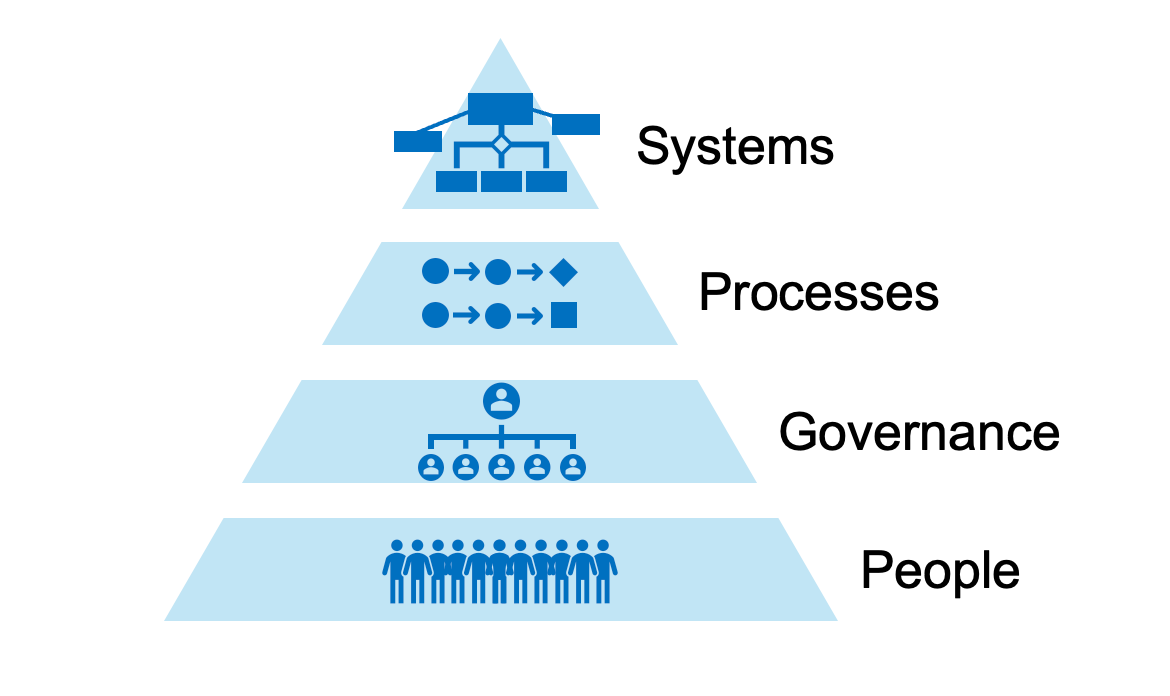
Figure 1: Building blocks of an organisation
Often, when complexity can’t be eliminated, it instead is relocated, typically downstream:
Where the complexity is relocated, careful consideration should be given to what that looks like and what it costs.
The hidden operating model
Every organisation has an operating model, documented through processes, policies, governance and system architecture. But many also operate through a second, largely unwritten model.
This hidden operating model consists of the reconciliations, workarounds, manual adjustments and specialist knowledge that allow the business to function despite imperfections in systems, processes and data.
This is not necessarily evidence of failure. Insurance is inherently complex. Decisions require judgement, regulatory requirements evolve and business reality inevitably creates exceptions.
The challenge arises when organisations lose visibility of where that complexity is being absorbed and how dependent they have become on the mechanisms managing it. This may include situations where:
Over time, the gap between the documented operating model and the one actually being used can become significant.
Following the complexity
Where complexity ultimately sits can reveal a great deal about how an organisation really operates.
Some is absorbed by technology through automation and embedded business rules. Some is managed through process design and governance. Frequently, however, it is absorbed by people.
Experienced employees interpret results, investigate anomalies, reconcile differences, challenge outputs and apply judgement where systems cannot. They connect information across functions and manage exceptions that do not fit neatly within established rules.
In effect, people become the integration layer between systems, processes and business realities. That capability is enormously valuable, but it can also create hidden dependencies. When trusted outcomes rely heavily on institutional knowledge and human intervention, organisations can develop concentration risks that may not be obvious from process maps, organisational charts or risk registers.
A different lens on AI readiness
As organisations increasingly explore AI, the hidden operating model takes on new significance.
Automation requires a clear understanding of the human judgement, interventions and workarounds that underpin how work is performed today. To understand the current state, the right questions need to be asked, including:
Trusted outcomes often depend not only on data and models, but also on context, interpretation and business judgement.
The risk is that organisations automate the visible process without understanding the invisible work that makes it reliable.
While recurring adjustments, reconciliations and manual interventions are often treated as operational irritants, they can also provide valuable signals of where complexity is being absorbed and where hidden dependencies have developed.
Actuaries are well placed to help make these dependencies visible. Operating at the intersection of data, systems, finance, risk and business operations gives us a vantage point from which to identify where workarounds have become embedded and human judgement is doing work that systems cannot.
As organisations rethink their operating models through AI and automation, this creates an opportunity to distinguish between complexity that adds value and complexity that has simply accumulated, and to make more deliberate choices about what should be simplified, automated or retained.
The goal is not to eliminate complexity. It is to manage it by design rather than by default.
The views expressed in this article are those of the author(s) or working group named below, and do not necessarily reflect the views of the Actuaries Institute. This work is licensed under a Creative Commons Attribution-NonCommercial-No Derivatives CC BY-NC-ND Version 4.0.

From natural hazard pricing to claims analytics, explore actuarial perspectives on Australia's general insurance sector
Subscribe to Actuaries Digital for free and receive the latest actuarial analysis, research, and commentary direct to your inbox