Climate and Sustainability
General Insurance
Who loses when insurance stops being affordable?



Claim your CPD points
The title is a clue - Mind the Gap: An Insurance Climate Vulnerability Assessment. The gap is the protection gap – the share of homes that are uninsured, which the Australian Prudential Regulation Authority (APRA) estimated based on the share of households facing unaffordable premiums. APRA used two global climate scenarios to explore how the physical and transition risks of climate change may affect the home insurance protection gap, and discussed the implications for the financial system.
An important design choice helped address a common blind spot in insurance data. Data based on existing home insurance policies does not capture households without insurance, including some that may be most at risk. To address this, the participating insurers modelled nearly 10 million freestanding houses across Australia, rather than only the homes they insure.
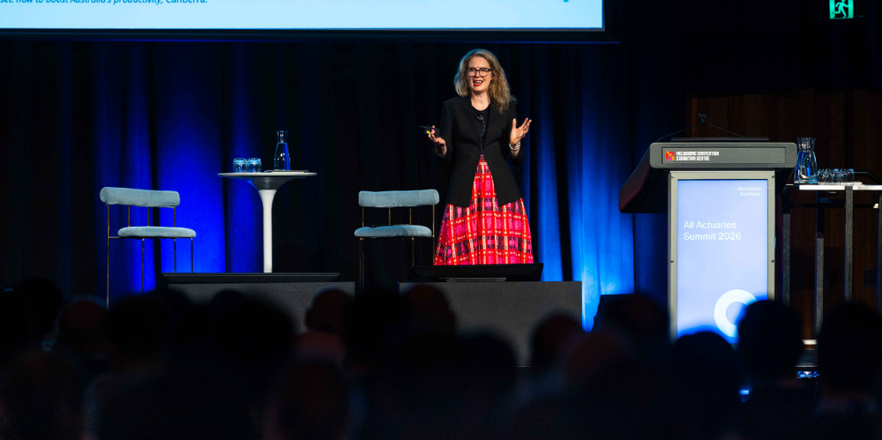
With climate risks and opportunities now touching most areas of actuarial work, the Climate and Sustainability Practice Committee hosted APRA's Head of Climate Risk Dr Graham Sinden and climate risk specialist Chetan Dwivedi for a June Insights session, chaired by Natalie Warren, Executive Manager Climate Resilience at Commonwealth Bank. The recording is available through the Institute’s CPD portal.
Over time, the protection gap is likely to widen as the stress-test results suggest that insurance premiums are likely to grow faster than household incomes. Further, the protection gap tends to widen more in regions where incomes are lower and exposure to weather perils is greater. Household insurance affordability stress doesn’t sit at the mean, it sits at the lower tail of the income distribution.
Under climate scenarios where there is no material change to the features of our built environment today, it becomes clear that households, insurers, banks and government all have a stake in addressing the challenge to reduce the protection gap.
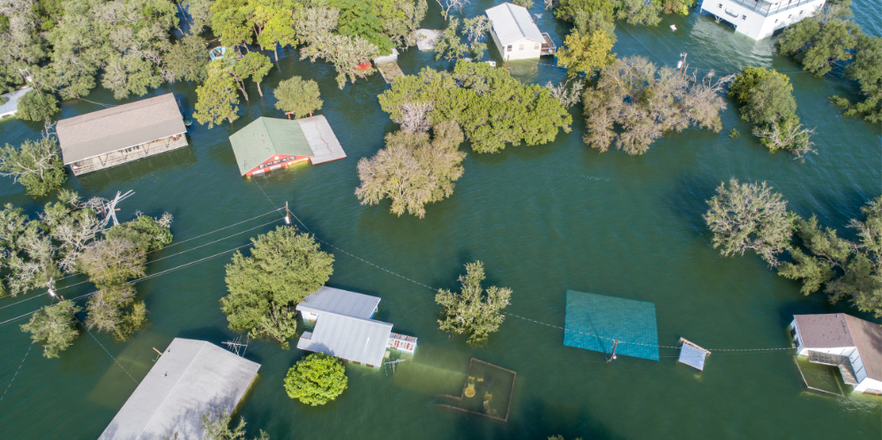
Households may face higher premiums or become uninsured, leaving them exposed to substantial financial losses and reduced financial resilience following severe weather events.
Banks may face higher credit risk where borrowers become uninsured, and damaged or devalued housing collateral no longer fully covers outstanding loans.
Insurers will juggle competing priorities – excelling in customer claims, shareholder returns commensurate with increasing risk, and community expectations of what insurance is and does - all while competing for a diversified portfolio of risk.
Governments, state and federal, continue to have uncertain clean-up and recovery costs. Increasingly they may make direct payments to uninsured households. With increasing fiscal costs and community expectations, government intervention in the home insurance market becomes more likely with increased climate risk.
Affordable housing and affordable insurance are both newsworthy topics in Australia right now and they are competing for the same resources. National Cabinet has set a target of building 1.2 million new homes in the five years to 2030. Meanwhile, the Insurance Council of Australia reports that the insurance industry has repaired or rebuilt almost 400,000 homes since 2022 [3] . The same trades, materials and supply chains will continue to be in demand fuelling construction cost inflation that feeds into premiums.
Australia is also more exposed to climate risk than other developed nations. The Insurance Council collaborated with Munich Re to compare the insured and economic losses from extreme weather of developed nations in their Insurance Catastrophe Resilience Report 2024-25 [4] . Australia ranked at least second highest for economic and insured losses per capita from extreme weather events from 1980–2020.
APRA’s CVA gives weight to the need for a more resilient built environment. It highlights the potential cost of inaction associated with future climate scenarios.
My observation, knowing how hard it is to attract investment into resilience, is that those costs of inaction can be flipped to represent the benefits of investing. Every cost avoided is a return earned on investment.
Investing in a more resilient built environment means avoided losses, less disruption to communities and economies over 25 years or more, and fewer Australians pushed into poverty.
For actuaries, APRA’s findings reinforce the importance of looking beyond aggregate results. Actuaries can help insurers understand the socioeconomic impacts of pricing decisions and work with the business to identify ways to incorporate resilience into risk evaluation, pricing and customer communications.
This Actuaries Institute Insights session was recorded for members and is available through the Institute’s CPD portal.
The views expressed in this article are those of the author(s) or working group named below, and do not necessarily reflect the views of the Actuaries Institute. This work is licensed under a Creative Commons Attribution-NonCommercial-No Derivatives CC BY-NC-ND Version 4.0.

From physical risk modelling to transition pathways, explore our latest thinking on climate and sustainability
Subscribe to Actuaries Digital for free and receive the latest actuarial analysis, research, and commentary direct to your inbox