Risk Management
General Insurance
The world enters the age of competition: Reflections on the WEF Global Risks Report 2026



Claim your CPD points
Drawing on insights from more than 1,300 global leaders and experts through the latest Global Risks Perception Survey (GRPS) , the report provides a measured assessment of a world moving into an “age of competition” — shaped by growing geopolitical fragmentation, economic volatility, rapid technological change and a gradual weakening of multilateral cooperation.
The 2026 GRPS evaluates 33 global risks across three time horizons: immediate (2026), short‑to‑medium term (to 2028) and long-term (to 2036).
The GRPS highlights a range of governance approaches with strong potential to support risk mitigation and preparedness, recognising that no single solution is sufficient on its own.
In a more fragmented global environment, minilateral coalitions, or “coalitions of the willing,” offer a pragmatic alternative to broader multilateral cooperation. At the same time, multi‑stakeholder engagement is emphasised as critical for addressing complex, interconnected risks and mitigating polarisation. Public awareness and education play an important role in strengthening resilience to misinformation, while financial instruments can help absorb and transfer economic and climate-related risks. More broadly, continued investment in research and development, particularly in frontier technologies, is essential to managing emerging risks effectively.
The report also highlights a set of emerging, high‑impact risks that could significantly reshape global systems. These include quantum‑enabled mass decryption, erosion of digital trust, widespread labour market disruption from AI, cyber‑physical attacks on critical infrastructure, geopolitical tensions over strategic resources, and climate‑related infrastructure failures. Societal risks such as misinformation-driven instability and deepening demographic divides further amplify these challenges, alongside the potential escalation of AI-enabled or autonomous weapons. These risks emphasise the importance of anticipatory governance, scenario planning and resilience-building. While their likelihood remains uncertain, many reflect the intensification and convergence of existing risks across systems.
What does the WEF Global Risks Report 2026 mean for actuaries?
For actuaries, the report reinforces the concept that historical data is not always a reliable guide to future experience, as risks become more interconnected, volatile and emerging in nature.
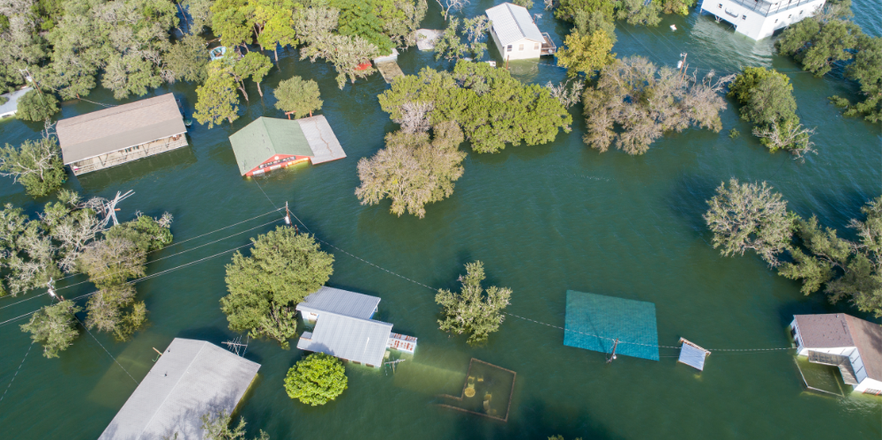
Many of the risks highlighted in the report have direct implications for financial institutions, from rising climate‑driven claims volatility affecting general insurance exposures to emerging AI-related fraud risks that are reshaping claims processes in life insurance and banking. At the same time, geopolitical tensions are contributing to a more volatile investment environment, with implications for investment strategy and asset‑liability management.
These are just examples of what actuaries need to consider, but the underlying theme is clear, the operating environment is constantly evolving, and actuaries need to remain adaptable, critically assess emerging risks and consider how these changes shape both the financial outcomes of the institutions we work in and the communities we serve.
The views expressed in this article are those of the author(s) or working group named below, and do not necessarily reflect the views of the Actuaries Institute. This work is licensed under a Creative Commons Attribution-NonCommercial-No Derivatives CC BY-NC-ND Version 4.0.

Subscribe to Actuaries Digital for free and receive the latest actuarial analysis, research, and commentary direct to your inbox

Actuaries help organisations identify, quantify and manage risk. Explore our latest thinking on risk management.