General Insurance
Redress and reparation schemes: Considerations for actuarial work



Claim your CPD points
Providing actuarial advice in this area requires careful consideration of the unique features of these schemes, together with due sensitivity and ethical practice. Long reporting delays, evolving legal and policy settings, multiple compensation pathways and changing societal expectations are some of the features of these schemes, which may materially impact the number of claims and cost. These challenges are often compounded by limited historical data, resulting in significant uncertainty that needs to be appropriately reflected in actuarial assumptions, analysis and advice.
Recognising the growing body of experience within the profession, the Redress and Reparation Schemes Working Group was formed to better understand actuarial involvement in advising these schemes and to strengthen best practice in providing advice if necessary. The Group undertook research by engaging with actuaries working in this area through consultation, a survey [1] (conducted in April 2026 with 46 responses) and a discussion forum at the May 2026 All Actuaries Summit.
This article provides an overview of redress and reparation schemes, the actuarial role, the key challenges identified through the Working Group’s research and considerations for actuarial best practice.
In Australia, there are several schemes currently in operation, with several more that have concluded. These schemes aim to redress harms across a range of areas including, but not limited to:
The premise of establishing these schemes is to recognise past harm to impacted people and to provide ‘redress’ in the form of financial payments, acknowledgement and apologies, counselling and support. The harms may take the form of mental and/or physical abuse, the trauma that may result from particular practices, and discrimination.
Whilst these schemes are often established by government, there can be many different stakeholders involved. Taking the National Redress Scheme (NRS) as a prominent example, it alone has involvement of:
The complexity of the NRS is demonstrated by the fact that it lists over 500 institutions who are participants in the Scheme, ranging from religious organisations, charities, community groups, sporting associations, schools and government-run entities. Further, a participating institution may be responsible for managing the redress liabilities of multiple individual sites within its organisational structure. For example, the NRS participant “Australian Catholic Redress Limited” is responsible for managing redress of 5,500 associated entities.
The type of organisation serviced by survey respondents is summarised in Figure 1.
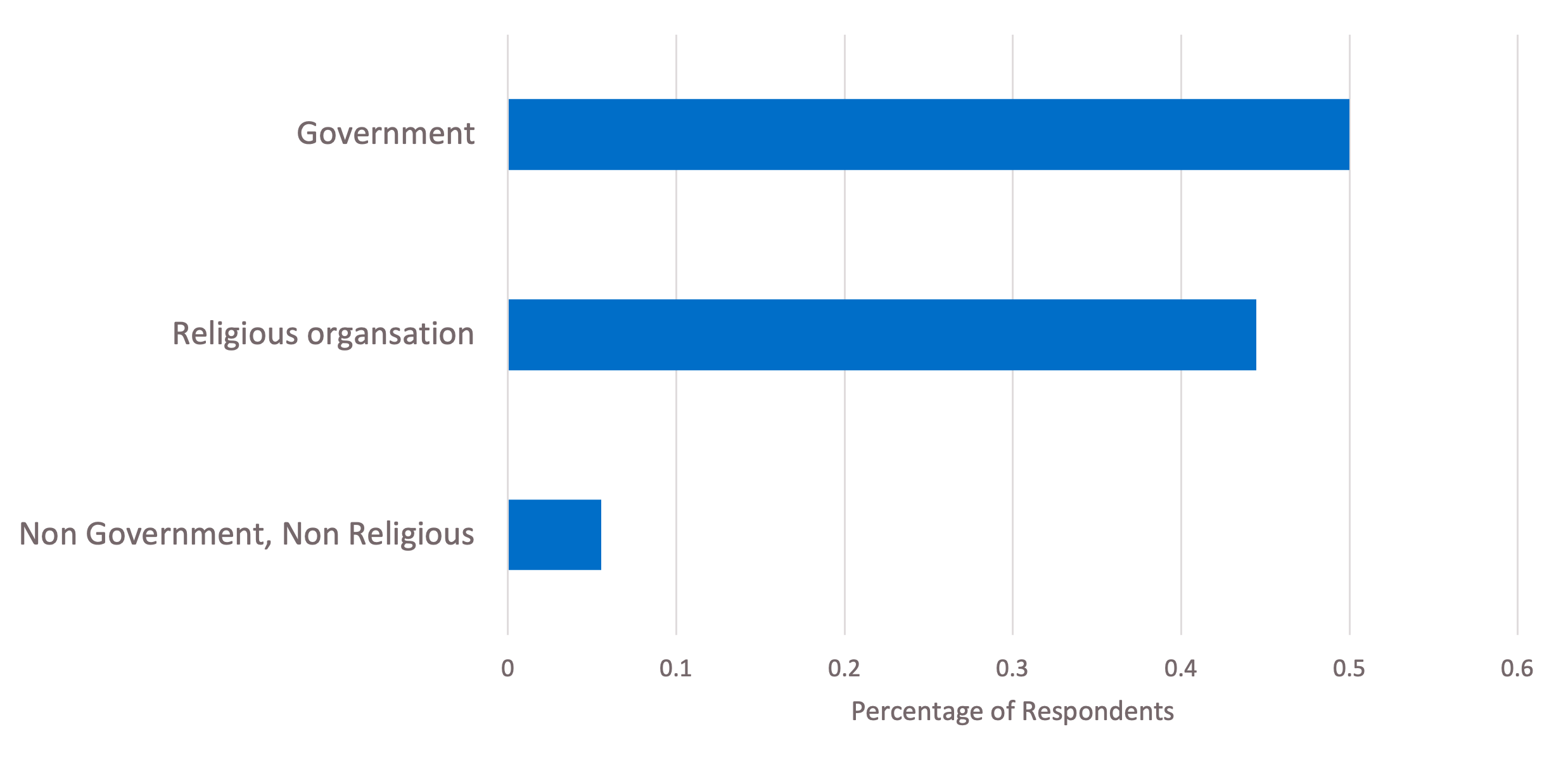
Figure 1: Type of organisation serviced by survey respondents.
Most survey respondents reported undertaking professional work in this field for government agencies and religious institutions. The majority of respondents indicated that, in addition to providing professional services relating to redress/reparation schemes, they also assisted clients with the consideration of potential exposures arising from civil litigation (another avenue for recourse available to impacted people).
Legal advisers, claims specialists and accountants were also identified as key professionals advising entities in this area.
Figure 2 summarises the main types of professional services provided and the relative frequency of the services provided.
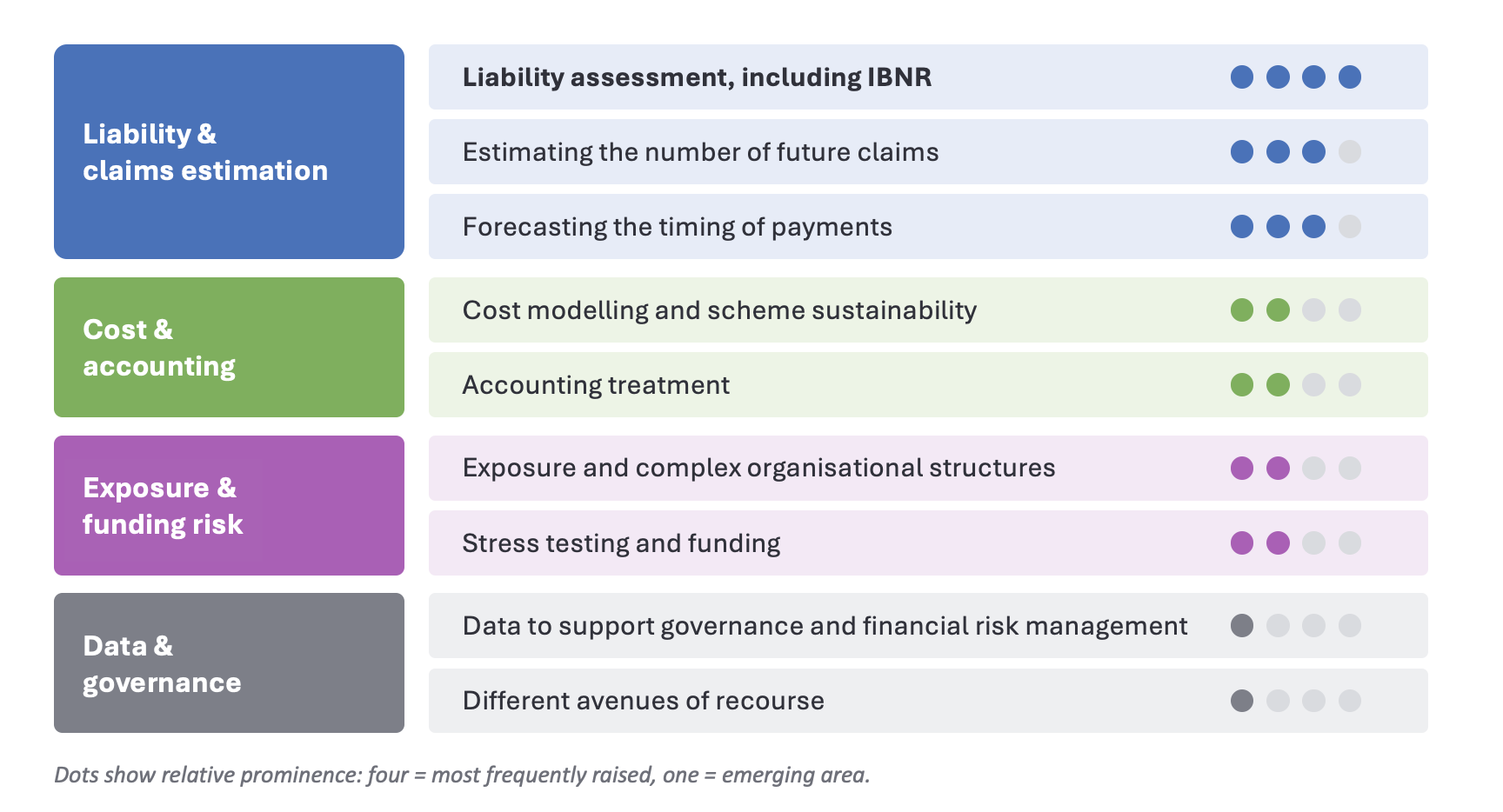
Figure 2: Types of professional services provided. Note: Dots show relative prominence: four = most frequently raised, one = emerging area.
Whilst the clear majority of survey respondents are focused on cost estimation and its associated details such as volume and timing, many other professional services were provided.
Key challenges
A recurring theme of redress/reparation liabilities are that they are influenced by factors that are difficult to observe or quantify from historical experience. The most common challenges encountered by the survey respondents when preparing actuarial advice are shown in Figure 3.
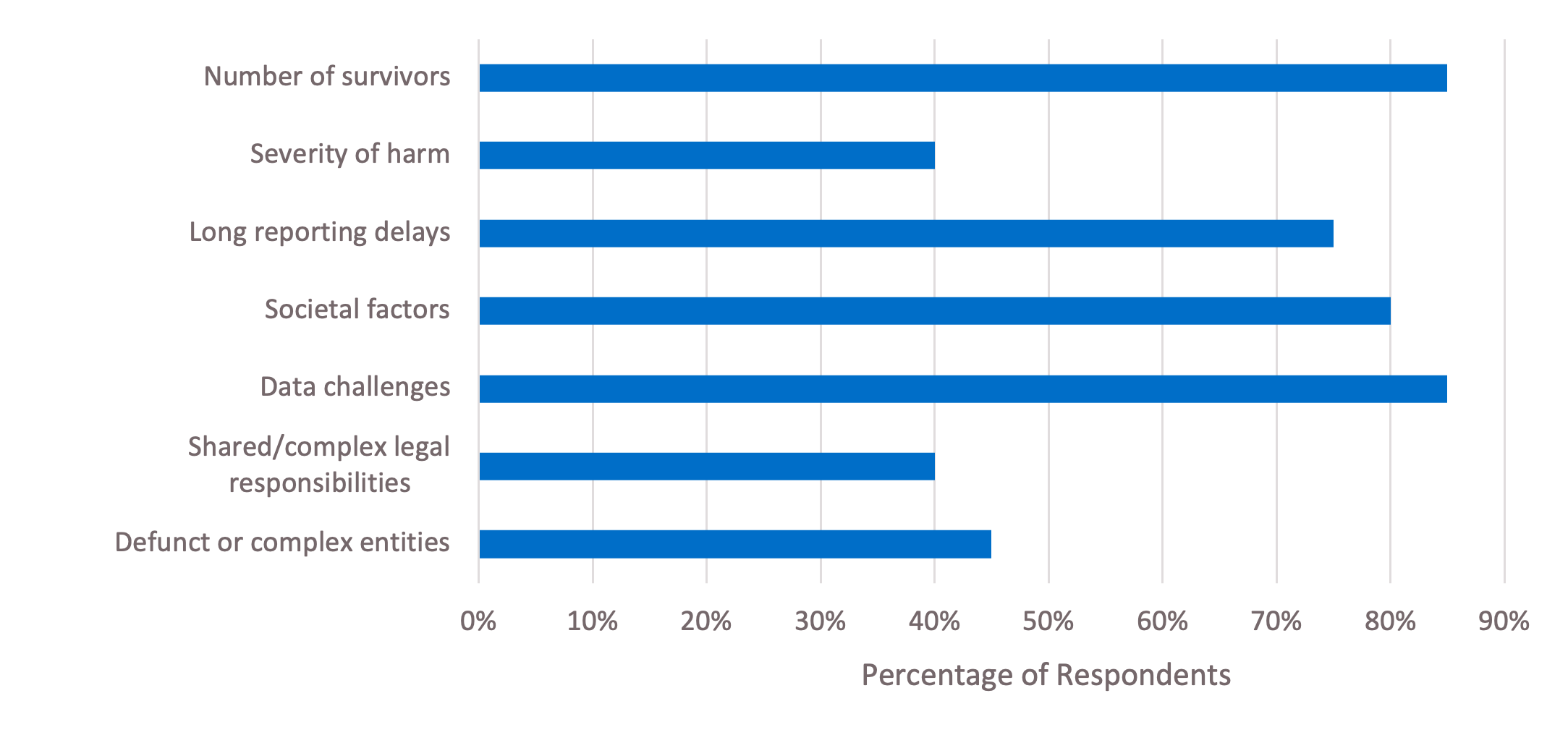
Figure 3: More challenging areas, compared to traditional general insurance claims.
Many of these challenges are driven by the nature of the events that redress/reparation schemes aim to address:
So, what standards are relevant when performing work for redress and reparation schemes? Figure 4 shows the range of survey responses.
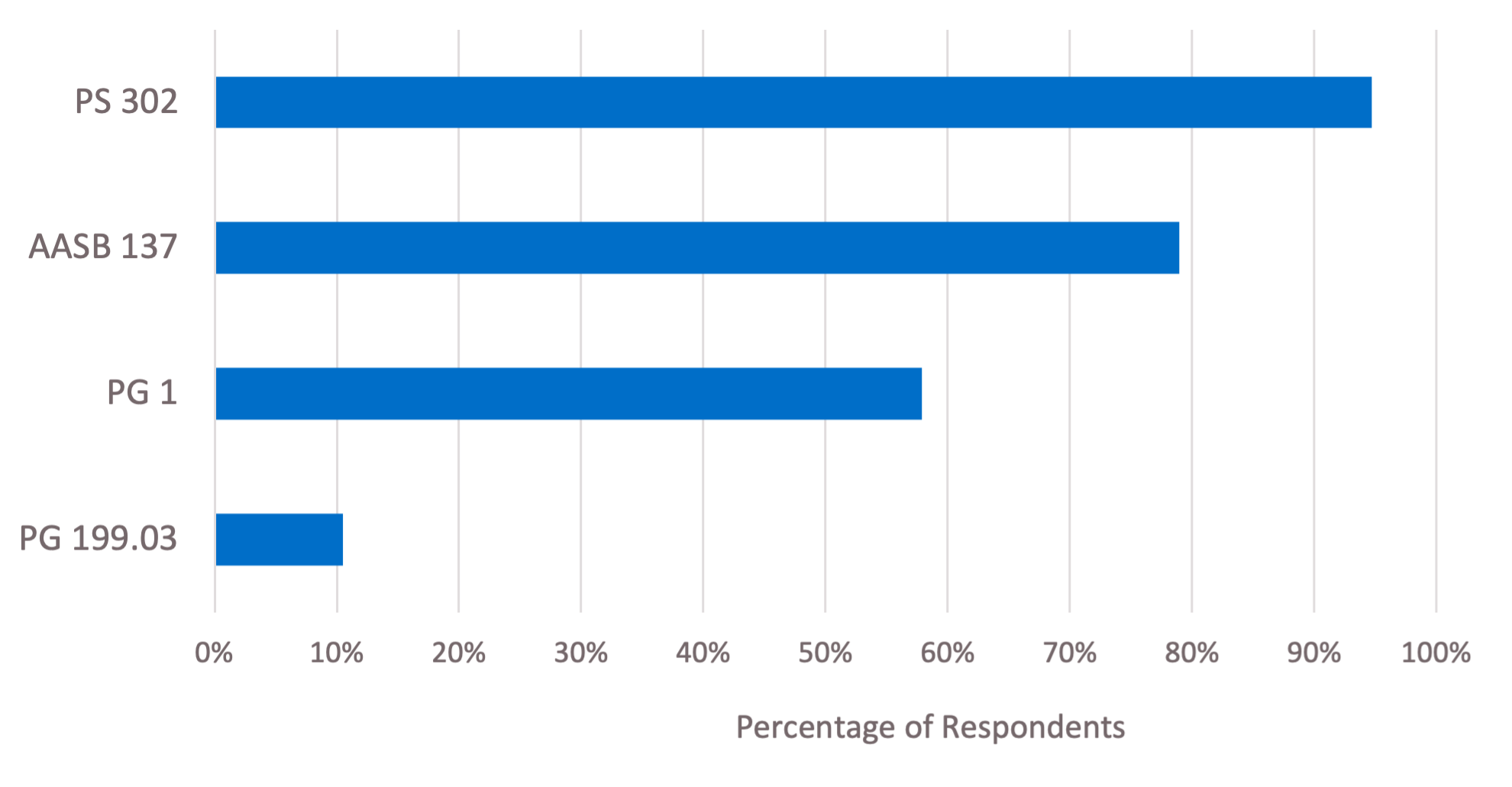
Figure 4: Professional and Accounting Standards referenced for redress and reparation services.
Professional Standard 302 Valuations of General Insurance Claims (PS 302) is applicable to the valuation of redress/reparation liabilities. All respondents who provided actuarial valuation advice reported referencing PS 302 when conducting this work. The couple of respondents who did not reference PS 302 indicated that they were not providing actuarial valuation advice
AASB 137: Provisions, Contingent Liabilities and Contingent Assets (AASB 137) was the most commonly referenced accounting standard; AASB 137 generally applies for the assessment of these liabilities.
Measurement and disclosure practices have varied between organisations and over time, reflecting differences in scheme maturity, data availability and accounting interpretations. Historically, approaches have ranged from disclosing the full exposure as a contingent liability, to recognising provisions only for reported claims while disclosing unreported claims as contingent liabilities, to recognising provisions for both reported and IBNR claims.
As schemes mature and more experience emerges, actuaries are often able to quantify liabilities associated with IBNR claims with increasing confidence. This can provide decision-makers with a more complete view of the financial implications.
While the accounting treatment ultimately rests with management and auditors, actuaries play an important role in assessing the extent to which liabilities arising from both reported and IBNR claims can be measured reliably and communicating the uncertainty around those estimates.
Many of the principles that actuaries working in this area should consider are not dissimilar to those that general insurance actuaries encounter, perhaps just with greater emphasis required on some aspects given the typical association with long timeframes, scant data and high uncertainty/volatility. These challenges are not unique, being similar for actuaries working in other long-tail and latent claim areas such as dust diseases or hearing loss. These elements are also referenced within PS 302. Actuarial skills and capabilities such as critical thinking, holistic focus, business acumen and understanding how to consider uncertainty are particularly useful for this type of work.
The remainder of this article discusses areas of practice that may need greater emphasis when providing advice for redress/reparation schemes.
Understanding and articulating an organisation's exposure is often a primary challenge. A key issue is that there is often a lack of reliable historical records. For example, for abuse in institutions, records of the number of children in a particular institution dating back many decades may not exist; for forced adoptions, records may not exist of the number of mothers and babies in particular homes.
Historical exposures for an entity may also have changed over time for many reasons:
To address these data issues, actuaries should:
Thinking ‘outside the box’ and considering proxy data sources may be helpful. Where direct experience is limited, actuaries may draw upon data from analogous schemes to inform assumptions. For example, the participant estimates prepared for the National Redress Scheme (NRS) used experience from Redress WA, the Queensland ex gratia scheme, and the Tasmanian Abuse in Care ex gratia scheme, adjusted for differences in eligibility, coverage and under-reporting. This provided an evidence base for estimating future participation in a scheme with little historical experience of its own.
Actuaries should clearly state the material issues they have considered and also those they have not (perhaps due to reliability/measurability). This assists organisations to distinguish between known and emerging drivers when actual experience differs from expectations, providing a clearer basis for identifying data gaps and targeting future data collection.
There may be more than one avenue of recourse available to impacted people.
For example, survivors of child sexual abuse can seek recourse through civil litigation or through the NRS, and some may pursue multiple avenues concurrently.
While mechanisms exist to prevent "double-dipping," linkages between the available avenues can exist. For example, high-profile media reports of successful child abuse civil litigation claims may impact the number of applications to the NRS.
Consideration should be given to all potential sources of liability, even if liabilities have only arisen from one source to date. Actuaries can assist organisations in understanding all avenues of recourse and ensuring appropriate consideration is given to each.
Given the nuances of this area, it is important for organisations to understand sources of uncertainty and their impact as they plan future requirements. With actuaries’ capabilities in understanding and quantifying uncertainties, they are well placed to assist organisations.
From wider consultation and anecdotal evidence, actuarial practitioners appear aligned on the use of scenario analysis to assist with estimation processes and to help illustrate risk and uncertainty. This includes assessing how key assumptions, data limitations, and other sources of uncertainty influence the outcomes under different plausible scenarios. Where data is incomplete or uncertain, scenario analysis can be used to assess how differing levels of reliance on the available data affect the actuary's assumptions and resulting estimates.
Practitioners that participated in one of the forms of engagement, also commented that communicating a range of plausible outcomes was often more helpful than presenting a single point estimate. This is especially true given aspects that add to the challenge of communicating uncertainty. Figure 5 summarises the key aspects participating practitioners highlighted.
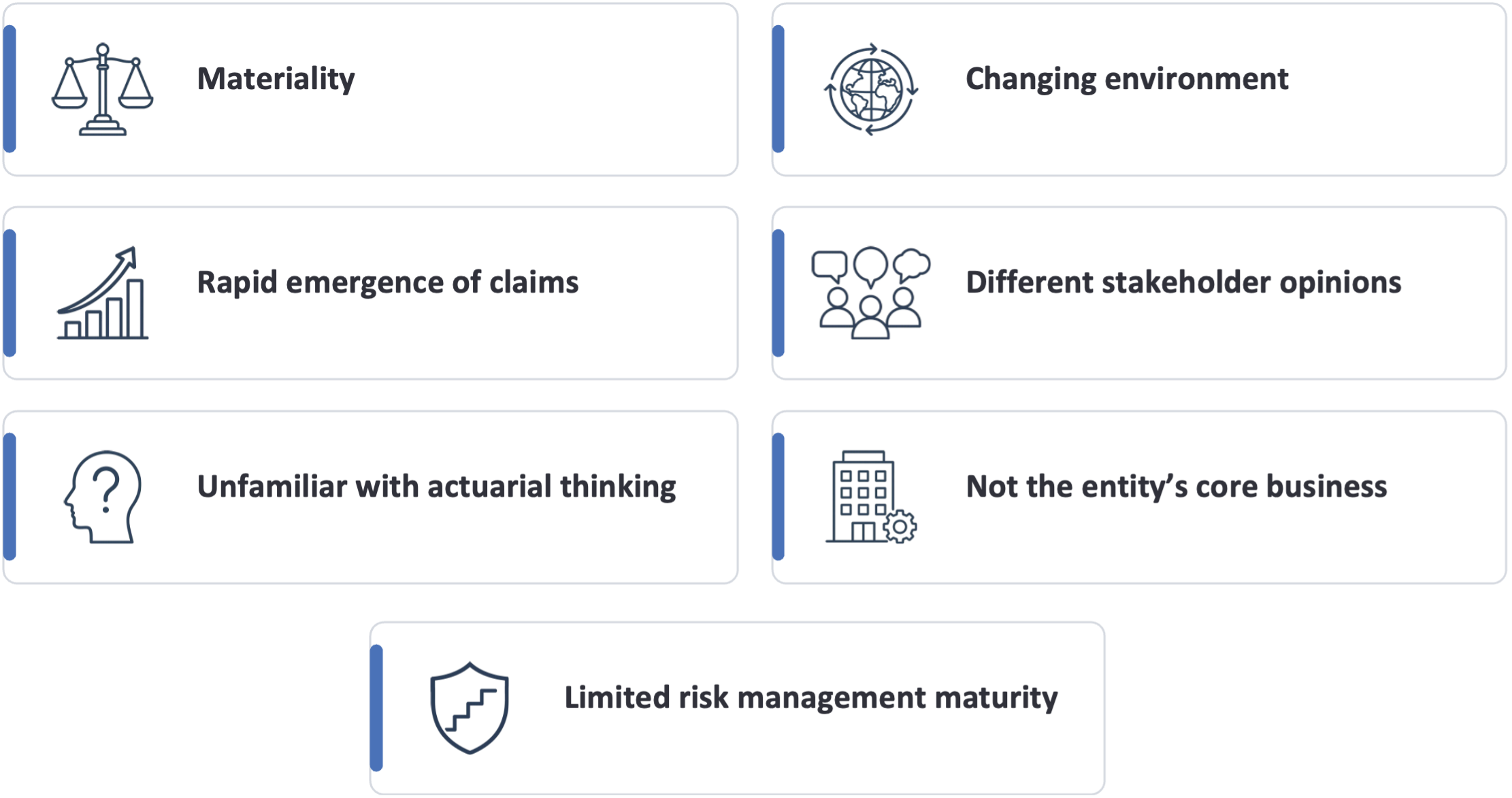
Figure 5: Aspects impacting communicating uncertainty.
Best practice is to develop scenarios that reflect real-world sources of uncertainty, such as changes in legal settings, reporting behaviour, or a potential surge in applications towards the end of the redress/reparation scheme.
Stress testing can also be used to understand what changes would materially breach an entity’s financial thresholds. Understanding the sources of uncertainty and evaluating the potential impact is particularly important for organisations with this exposure as they plan and consider future financial requirements.
Redress and reparation schemes present actuaries with complex, sensitive and evolving areas of practice.
While many of the underlying actuarial principles are common with long-tail general insurance work, the application of those principles often requires greater emphasis on understanding exposures, addressing data limitations, consideration of multiple pathways to recourse and the communication of uncertainty. Clear articulation of assumptions, transparent communication of plausible outcomes and sensitivity to the circumstances of impacted people should remain central to actuarial work in this area.
Actuaries can add significant value by bringing structured analysis, professional judgement and scenario-based thinking to support organisations in understanding their obligations and planning for future outcomes.
[1] The survey was offered to the entire actuarial membership via the Actuaries Institute Bulletin and also to the members listed as General Insurance practitioners via a targeted email from the Actuaries Institute.
The views expressed in this article are those of the author(s) or working group named below, and do not necessarily reflect the views of the Actuaries Institute. This work is licensed under a Creative Commons Attribution-NonCommercial-No Derivatives CC BY-NC-ND Version 4.0.

From natural hazard pricing to claims analytics, explore actuarial perspectives on Australia's general insurance sector
Subscribe to Actuaries Digital for free and receive the latest actuarial analysis, research, and commentary direct to your inbox