Data Science and AI
Career and Leadership
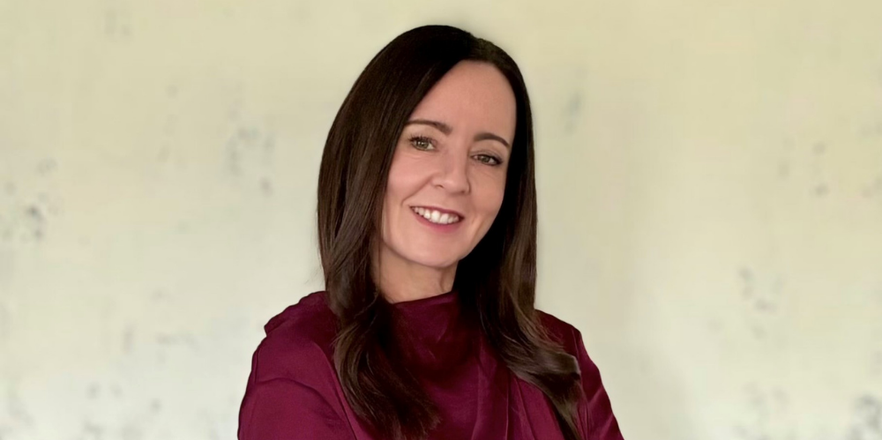
Spotlight on Andrea Cross




Claim your CPD points
Andrea Cross, winner of the 2025 Actuaries Institute Women Leaders in AI and Data Science Scholarship, on why culture — not just capability — decides whether AI transformation actually works.
As Treasury's first Chief AI Officer, she has learned that technology never drives lasting change on its own — people and culture do. That lesson, sharpened through her scholarship studies at Stanford, has reshaped how she leads transformation at the heart of government: less about authority, more about creating the conditions for people to build confidence and capability.
Andrea Cross shares with us what it meant to win the scholarship and the impact it has had.
Winning the scholarship was a privilege, and it came at the right time in my career. I had settled into the CIO role at Treasury and was establishing a new AI capability. It gave me a rare chance to step out of everyday delivery and ask what kind of leader I needed to be for this next phase.
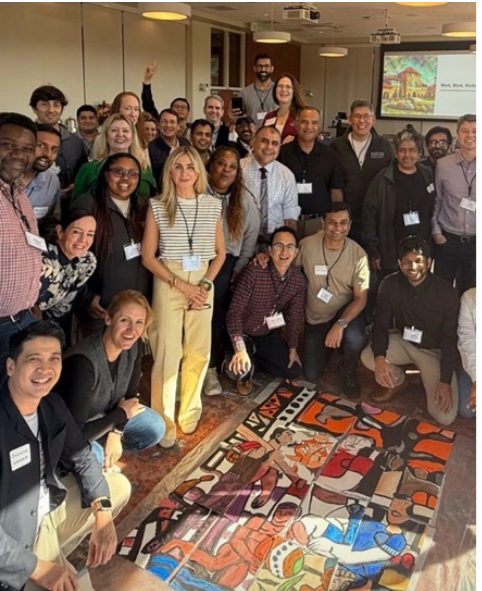
Learning from global leaders at Stanford Graduate School of Business as part of my scholarship studies and engaging with tech and AI companies across Silicon Valley at a time of unprecedented change, broadened my perspective on how great leaders navigate uncertainty, transformation and innovation.
The recognition itself was also meaningful. I was proud to represent women in government Information and Communications Technology (ICT) and bring visibility to an area of the public service where much of the work happens quietly but is critical to how government functions.
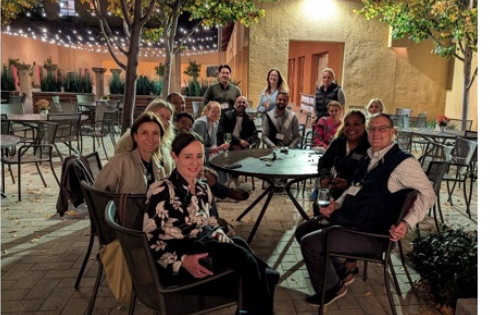
The clearest lesson was that technology does not drive lasting change on its own. Culture and people do. Across the program, leaders from different sectors were grappling with similar disruption. Many had access to comparable tools and capabilities, but what separated them was whether their people had the trust, permission and capability to use it well. That reframed leadership for me as less about authority and more about creating the conditions in which people can try new approaches safely and build confidence and capability.
I came away convinced that people and culture are the transformation. Technology is the enabler. If leaders treat it as the whole answer, they will lose momentum and people along the way.
Two things stayed with me. The first came as much from the cohort as from the faculty. Leaders from different countries and sectors were describing the same reality: constant change and ambiguity are now normal, and AI has only accelerated the pace. No one had all the answers, which felt both reassuring and energising.
The second was more personal. Original thinking depends on the range of people and experiences you draw on. That has not always come naturally to me. I have often been more comfortable doing the work than building the network around it, and at times that has probably narrowed the perspectives I was learning from.
I have become more deliberate about where I put myself, who I learn from, and how I use the time and generosity people offer. Broadening your perspective does not happen through exposure alone. You have to make space for it, seek it out, and be open to being challenged by it.
My career has not been a straight line, or particularly planned, but from where I sit now the steps I have taken all connect. I studied design, started my career working in tech start-ups, and later moved into the public service. Each stage shaped me in a different way:
That progression, from individual design projects to whole-of-government transformation, changed how I lead. Technology at scale is not just a technology challenge, it is enterprise transformation involving how an organisation operates, the culture it creates, how people work, and how services reach the public.
I began my career helping organisations understand why they needed a website. The internet was the defining shift then; AI is the defining shift now. In many ways, my career has been about helping organisations adapt to those moments of change.
Earlier this year I was appointed Treasury's first Chief AI Officer. The role is about leading enterprise transformation, not simply introducing new technology. It is about building the culture, confidence and capability required for staff to use AI safely, responsibly and effectively.
Over the past year, we have set a clear roadmap, established governance and guardrails, built staff capability through training and tools, and created an AI champions network to support adoption across the department. The immediate value is in summarising, drafting and analysing content. We are also piloting its use in coding, data modelling and research, while sharing what we learn with other agencies so we all can move faster collaboratively.
What this has taught me is that AI leadership has to be shared. No one has all the answers yet. We continue to learn while we build, testing carefully and sharing lessons as we go. Leaders create permission, champions build trust, and staff bring curiosity and practical insight. That confidence helps shift time towards the work people do best - thinking, judgement and insight.
When I began my career, women were very much the minority in technology. I learned quickly that hard work matters, but hard work alone is not enough. You must also make your contribution visible.
What I see in the next generation of women in technology is strong capability and enormous potential. What they often need most is confidence and sponsorship to back themselves and step forward before they feel ready.
My own experience has been that confidence grows through experience, but it also grows when others advocate for you and open doors at the right moment. That is not something women should be expected to solve alone. At Treasury, we support this through early exposure for work experience students and technology graduates, as well as mentoring opportunities for women in technology, so they can see a future for themselves in these careers sooner.
My advice is to lean into the discomfort, seek out opportunities, and put yourself forward for high-profile roles. The discomfort passes. What stays is the self-belief that comes from taking a step forward and realising you were more ready than you thought.
In five years, I expect AI to be a normal and trusted part of government, embedded in services, supporting analysis, improving everyday work and helping people make better decisions. The opportunity is to use AI where it adds genuine value, while keeping people at the centre and governing it well as it evolves.
The organisations that benefit most will not be those with the newest technology. They will be the ones that build the foundations to use it well. That means strong governance, mature data, clear accountability, capable people and work practices designed around where AI can make the greatest difference.
In government, it also means solving common problems once, using reusable patterns, communities of practice and shared infrastructure rather than each agency starting from scratch. Access to AI will not necessarily be the differentiator. The real difference will be how well organisations learn, adapt and apply it to problems that matter.
The Actuaries Institute’s AI and Data Science Learning Resource
Andrea's advice, lean into the discomfort, seek out the people who'll challenge you, applies well beyond the C-suite. Actuaries Institute members looking to build your own AI and data science capability can start with the AI and Data Science Learning Resource , free to members with over 100 articles, videos, podcasts, and courses tailored to actuarial professionals.
Actuaries Institute
Women Leaders in
AI and Data Science Scholarship
This international study opportunity supports senior leaders working in AI and Data Science. Previous recipients include Professor Cori Stewart, Founder and CEO of the Advanced Robotics for Manufacturing Hub (ARM Hub), Zilinka Jiang FIAA, Executive, Data Science at Quantium and Lisa Green, Telstra Executive. You can read more about their achievements here .
The views expressed in this article are those of the author(s) or working group named below, and do not necessarily reflect the views of the Actuaries Institute. This work is licensed under a Creative Commons Attribution-NonCommercial-No Derivatives CC BY-NC-ND Version 4.0.

From model governance to machine learning, explore actuarial perspectives on data science and artificial intelligence
Subscribe to Actuaries Digital for free and receive the latest actuarial analysis, research, and commentary direct to your inbox