Career and Leadership
Data Science and AI
Presidential Reflections: The Value Question



Claim your CPD points
Eight months in, I've mostly been asking it of you, in lecture theatres, function rooms and corporate lobbies from Perth to Hong Kong. What follows isn't a list of where I've been. It's what I've heard, and what I think it means.
I've used almost every member catch-up this year to make the same argument: our skills have real value well outside the sectors that currently employ most of us. FMCG, utilities, start-ups, tech. Not as “wider fields”, but as normal places for an actuary to work.
I want to be careful here, because that argument is easily misheard. The majority of our members work in insurance, superannuation and financial services, and that work is not something we're trying to move away from. It's the opposite. It's the evidence. The reason a board in another industry should want an actuary in the room is precisely that we have spent decades being trusted with mandated obligations, capital at risk and forward-looking numbers that get audited. That track record is the credential. Broadening the profession means taking what financial services taught us and putting it to work somewhere new.
What struck me in these conversations is how many members are already doing this quietly, inside their own organisations, without describing it as a strategic shift. They've simply asked a business what problem it's trying to solve, and then answered it.
Continuing a tradition of past Presidents, I toured the Australian and New Zealand universities offering undergraduate actuarial studies this year. The Q&A sessions were the most useful hours of my year, and the dedication of the teaching staff who deliver those courses was evident everywhere I went. They are building our future actuaries, and they do it with real care.
The students are not asking how to pass exams. They're asking whether the qualification will still be worth something in a decade, and what part of the job a machine can't take. That's a harder and better question than the one my cohort asked, and I'd note it's the same question my address puts to practicing actuaries: do you know what it is your customer actually values?
If the answer is “producing the number”, that's a fragile position. If the answer is “the judgement that sits around the number”, it isn't.
I came away confident, and usefully challenged. This cohort will not accept “the profession has always been valuable” as an answer. Nor should they.
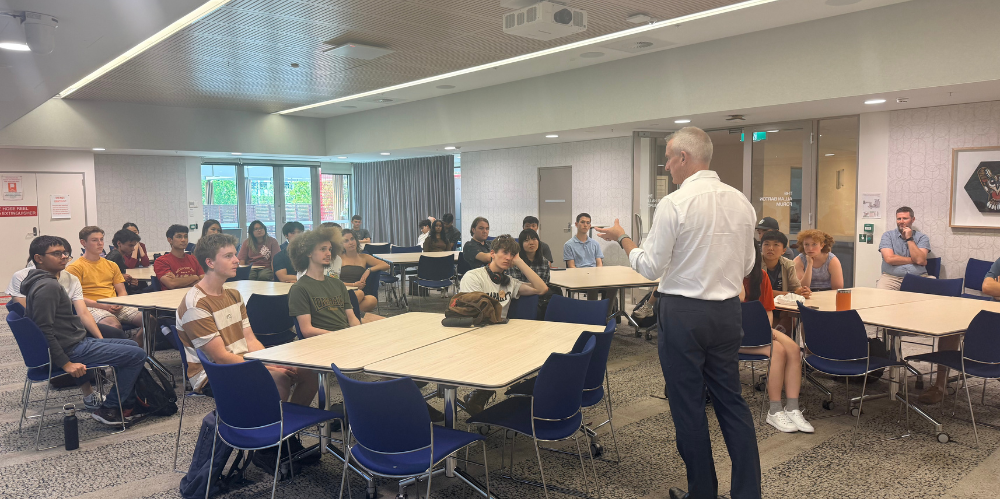
Scott Reeves and students at ANU visit
The AI conversation has matured this year. It's moved from broad speculation to practical questions: which tasks, which controls, who signs off. That shift plays to us. Governance, guardrails, validation, monitoring, and the discipline to say what a model can and can't be relied upon for — this is recognisable actuarial territory, and I think we are genuinely well placed to play an important role in it.
The Institute has moved with that on three fronts. First, the establishment of our AI Advisory Board, which held its first meeting this year. Its purpose is straightforward: give the Institute genuine depth of understanding on AI and its implications for Australian actuaries, drawn from people with hands-on experience of the technology and of what it means for corporate governance.
Second, and I think most consequentially, we've built AI into the qualification itself. The Communication, Modelling and Professionalism subject has been updated to include generative AI and renamed PCAI: Professionalism, Communication and AI, and launched in Semester 2, 2026. That's a deliberate signal. If judgement around AI outputs is where our value sits, it belongs in the pathway, not in optional extras.
Third, at the end of August we launch a report on AI governance in financial services with the Human Technology Institute at UTS. It's the kind of work I want us doing more of: taking a live governance problem, applying actuarial thinking to it, and putting the result in front of the people making decisions.
Alongside that, Amanda Aitken's Distinguished Services Award and our CEW Women Leaders in AI and Data Science Scholarship, awarded in June to Professor Cori Stewart of the ARM Hub, both point to where the profession's energy is going. For members wanting a way in that doesn't require a career change, our AI learning resources are the place to start.
In March we brought Practice Committee leaders together. The considered work these members do, across standards, practice guidance and member education, is a large part of what makes membership worth having, and it's a result of the effort many of our volunteers put in year after year.
We also used the day to draw strategic insight from the people closest to practice. That input fed directly into Council's Strategy Deep Dive, held in August, where Council worked through the opportunities ahead for the profession and how we serve the needs of our future customers: the young actuaries of today and those still deciding whether to join us. It was a genuinely constructive session, and one that will shape our thinking as we work towards drafting the 2028 to 2030 strategy.
The same professionalism showed up everywhere I went. The member catch-ups in Brisbane, Melbourne, Canberra, Perth and Wellington surfaced genuinely different local pressures, and an identical underlying commitment to doing the work properly. In July, Elayne Grace and I were warmly hosted by the New Zealand Society of Actuaries at their Sessionals in Auckland and Wellington, where I had the pleasure of playing a small part in presenting certificates to local members.
And then there was the 2026 All Actuaries Summit in Melbourne. An excellent event, delivered with the polish that comes from an experienced Events team who make a complex programme look effortless.
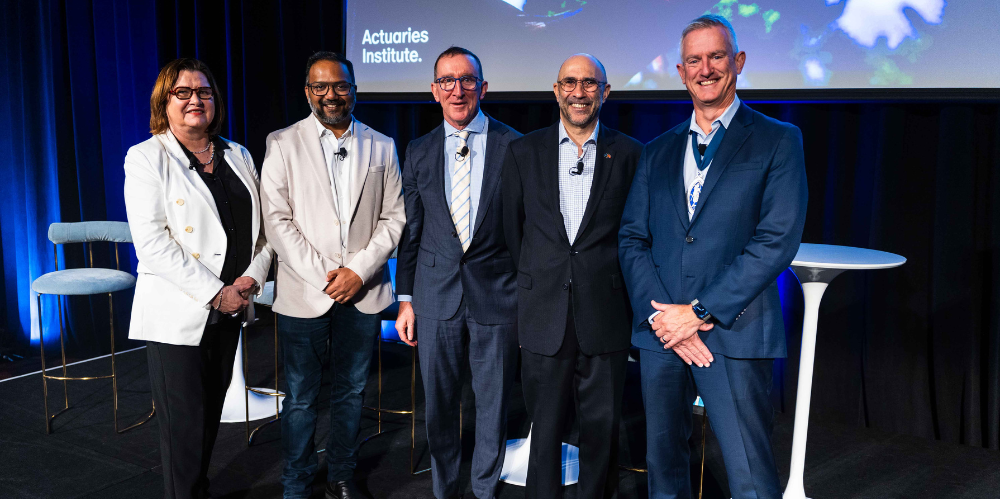
Jacki Johnson, Suhit Anantula, Andrew Matthews, Ian Hamm and Scott Reeves at the All Actuaries Summit
In August, Elayne and I travelled to the region for the 2026 Asian Actuarial Conference in Singapore, hosted by the Singapore Actuarial Society as it marked its 50th anniversary.
The itinerary is worth describing, because it shows what this kind of tour is actually for. In Hong Kong we met our Asia Subcommittee and local young actuaries, sat down with the Actuarial Society of Hong Kong and the Insurance Authority, and met HKMC Annuity Limited, a government-backed body building Hong Kong's annuity market in the face of a rapidly ageing population. That last conversation let us share Australian thinking on retirement income and longevity risk, and we learnt a great deal in return.
In Singapore, alongside the conference, we met the Monetary Authority of Singapore, visited PartnerRe, which hosts one of our larger member clusters in the region, and presented a session on climate risk and insurance affordability. I also joined a Presidential panel on redefining the future actuary with counterparts from the IAA, the IFoA and the SOA, which was about as direct a test of this year's theme as I could have asked for.
Our members in Asia do outstanding work on this Institute's behalf, often with less visibility than their Australian colleagues. Being in the room with them was the point.
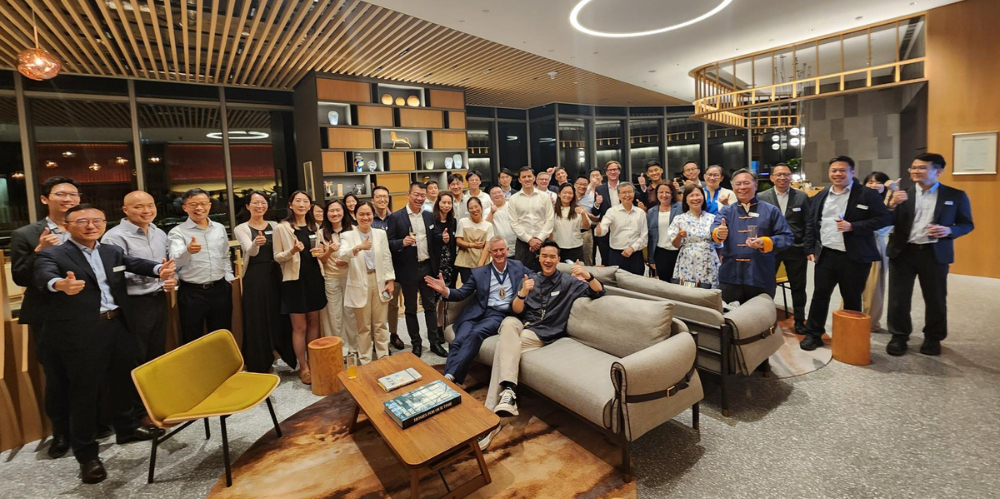
Hong Kong member event
Before I get to that, thank you to everyone who completed our member survey. Satisfaction lifted from 70% to 80%, which is really encouraging. Our Net Promoter Score eased from +26 to +11. The comments show there is some uncertainty about the future, particularly around AI, career pathways and how our skills will be valued.
That feedback shows us where to focus. Council and the executive team recently held a strategic deep dive exploring how the role of the actuary may evolve, the skills actuaries will need for that future, and how the Institute can best support you in building them. That work is already underway.
In my address I said I'd lead by example and ask what you want us to work on for you. That offer stands, and I'd like more takers. If you have a view on where our skills should go next, or what's getting in your way, tell me .
The views expressed in this article are those of the author(s) or working group named below, and do not necessarily reflect the views of the Actuaries Institute. This work is licensed under a Creative Commons Attribution-NonCommercial-No Derivatives CC BY-NC-ND Version 4.0.

From career insights to big-picture thinking, our interview series brings together diverse voices shaping the actuarial profession
Subscribe to Actuaries Digital for free and receive the latest actuarial analysis, research, and commentary direct to your inbox