Data Science and AI
Not your average fairytale: Could World Cup debutants become football’s ultimate Cinderella story



Claim your CPD points
With the group stage now complete, the tournament has officially entered the Round of 32, increasing the competition and reducing the margin for error. Since 11 June, we have seen intensive games and magical moments that have captivated and united fans. Now entering the next phase of the competition, it is going to be interesting to see which nation can lift the winner's trophy on 19 July (local time).
The 2026 FIFA World Cup marks the tournament's biggest expansion yet, with the number of participating nations increasing from 32 to 48 teams. It is the first expansion of the competition since the 1998 FIFA World Cup in France, when the tournament grew from 24 to 32 teams.
The expanded 48-team format has opened the door for more nations to compete for football's ultimate prize. Among the biggest beneficiaries are Cabo Verde, Curaçao, Jordan and Uzbekistan, with all four nations qualifying for the FIFA World Cup for the first time in their history.
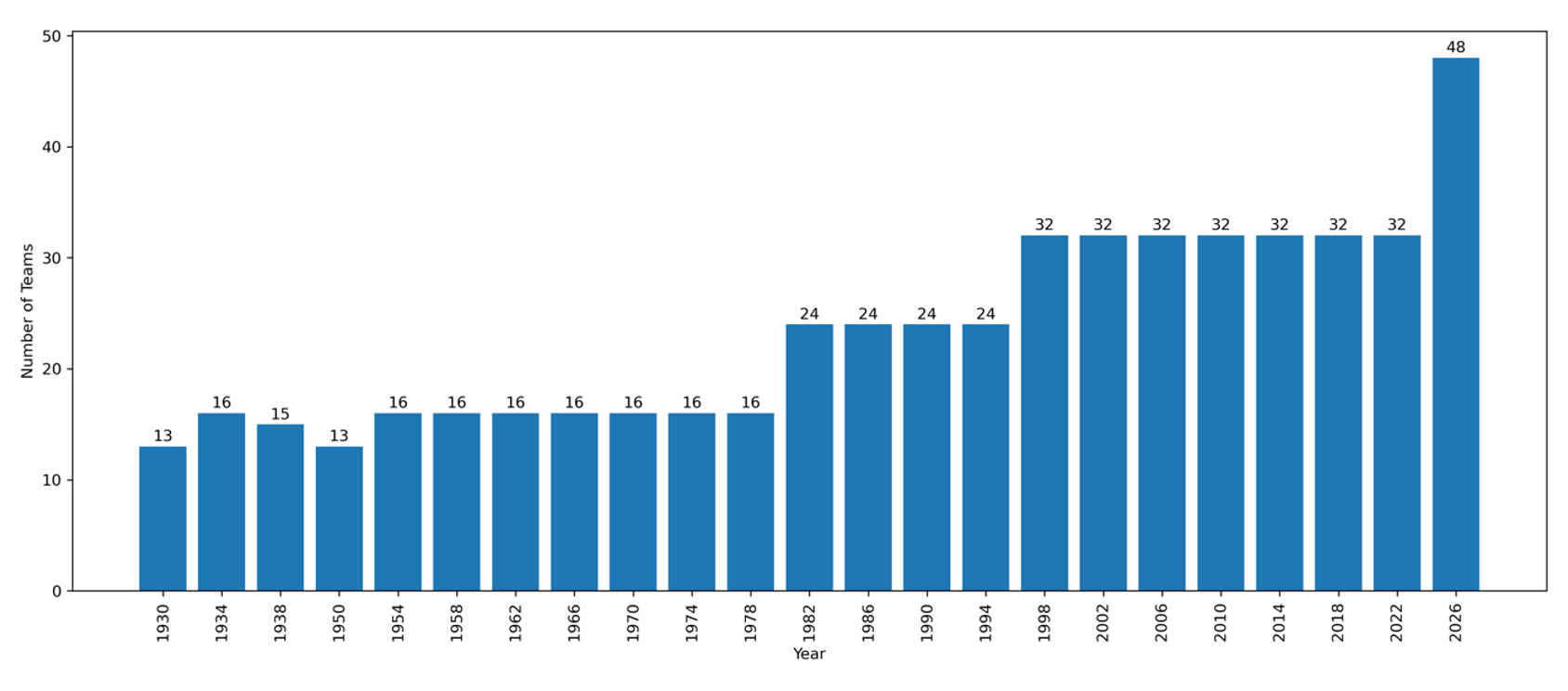
This expanded format has already produced some remarkable results. World number 2 and pre-tournament favourites Spain were forced to settle for a draw against debutants Cabo Verde — a result that has sparked an intriguing question: could this be the year of a true Cinderella story? In this article, YDAWG investigates the history of the FIFA World Cup to examine whether football's newest underdogs have what it takes to become the surprise tournament champions.
History has shown that the FIFA World Cup can produce unforgettable upsets, but could a nation from outside football's traditional powerhouses go all the way? Cabo Verde has already taken the first step, progressing to the Round of 32 (without winning a single group-stage match). However, fellow first-time qualifiers Curaçao, Jordan and Uzbekistan were unable to advance beyond the group stages.
Since the inaugural FIFA World Cup in 1930, a total of 86 different national teams have competed at football's biggest tournament.* Brazil (the only country to have competed in every tournament), Argentina and Italy have the most appearances (although Italian fans may want to forget about Italy’s performance in the qualifiers for the 2026 World Cup).
*This figure counts nations under the names they competed with at the time. For example, East Germany, West Germany and Germany are each counted separately.
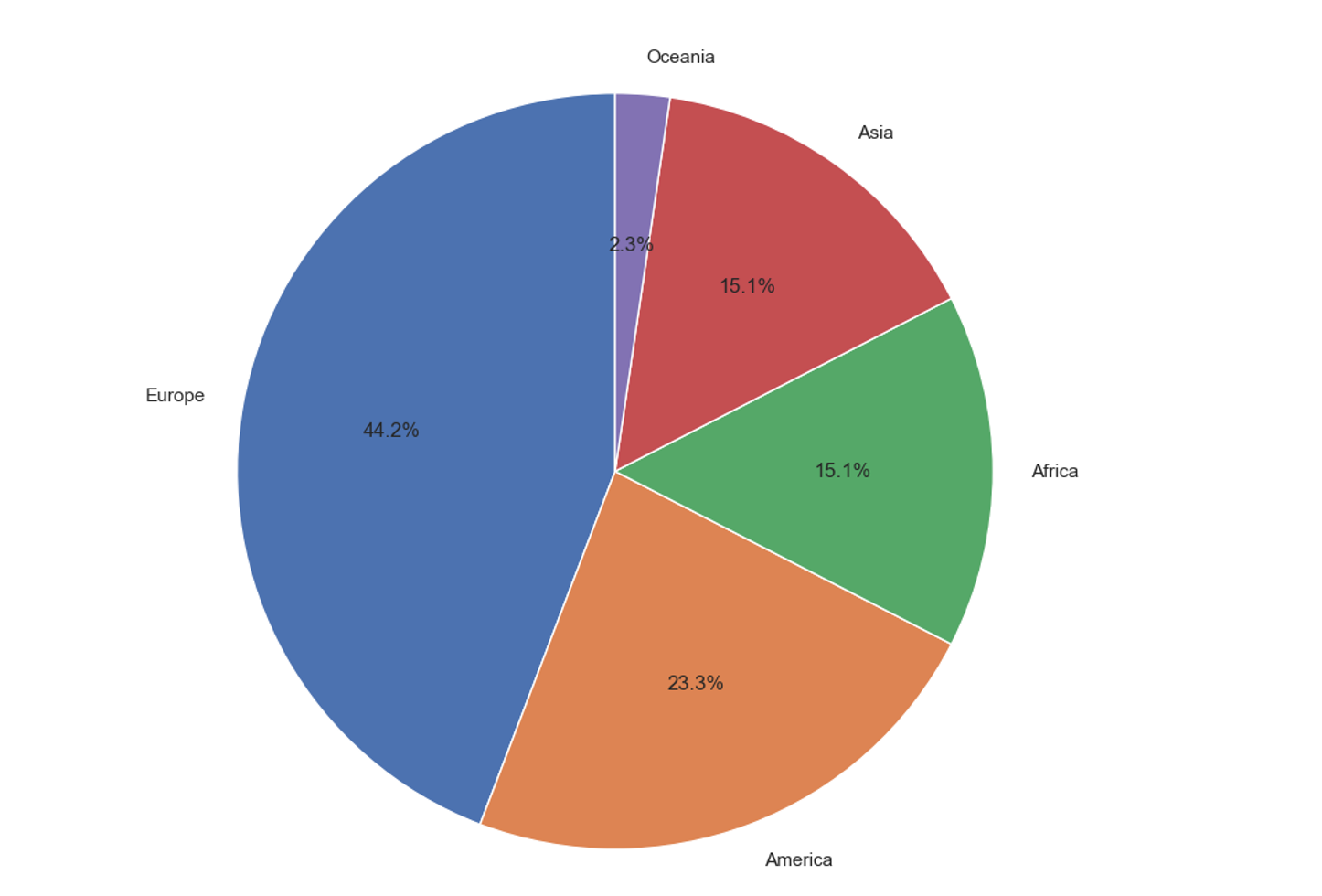
The competing nations have been grouped according to their continent of origin rather than their FIFA qualification pathway. This classification does not reflect qualification confederations. For example, Australia is listed as an Oceanian nation despite competing in the Asian Football Confederation (AFC) since 2006.
More than 40% of the world’s nations have competed in the FIFA World Cup since its inaugural tournament in 1930. However, there have only been eight nations to have won the tournament, with no team winning on debut since Italy in 1934.
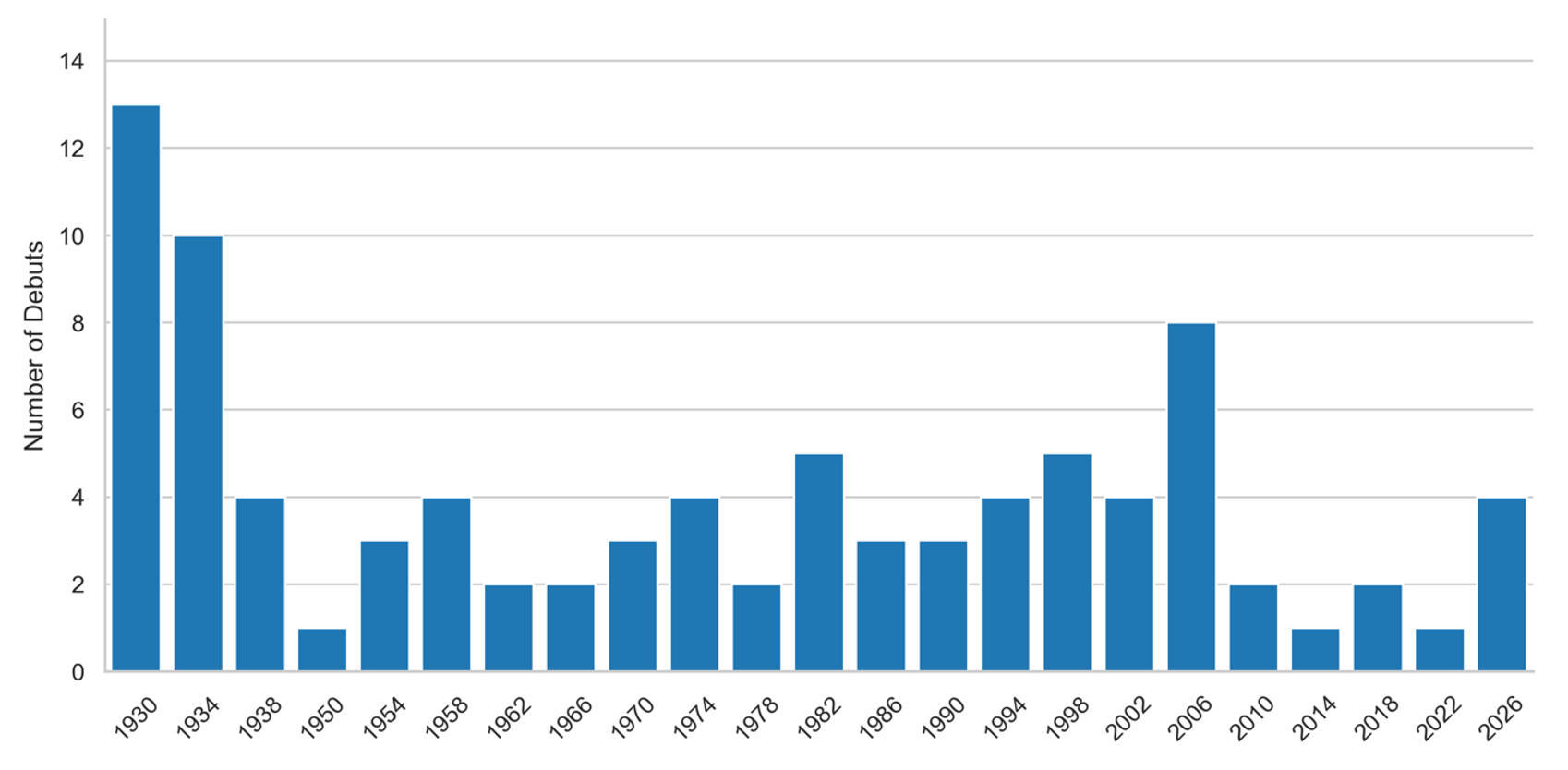
2026 has the most number of debutants since 2006
For teams that have reached the World Cup final, it takes an average of three attempts to get there. The most recent nation to reach its first World Cup final was Croatia in 2018, doing so on their fifth tournament appearance. France took the longest to make their maiden final, qualifying on their tenth World Cup appearance which occurred in 1998 when they hosted the tournament and went on to win their first World Cup title.
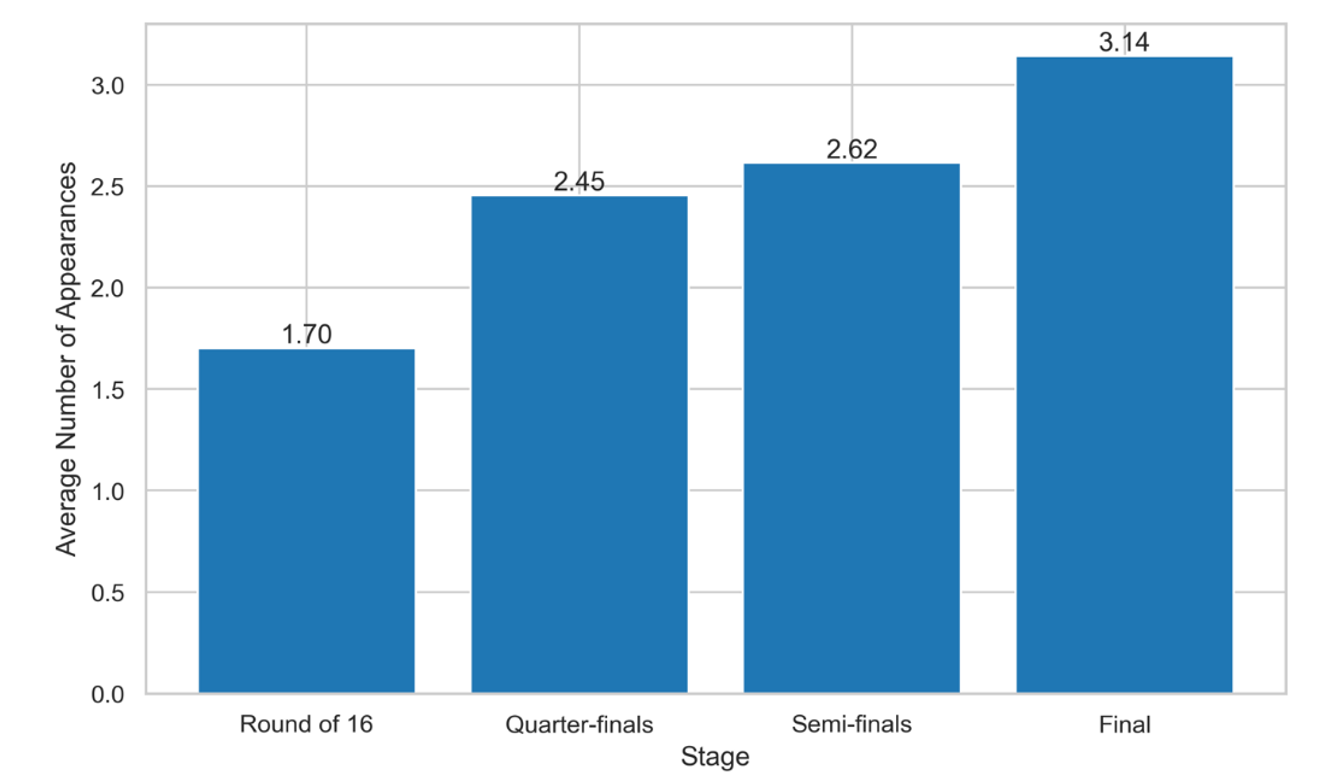
Approximately two-thirds of all nations that have competed at the FIFA World Cup have progressed to the Round of 16, while around half have reached the quarter-finals at least once.
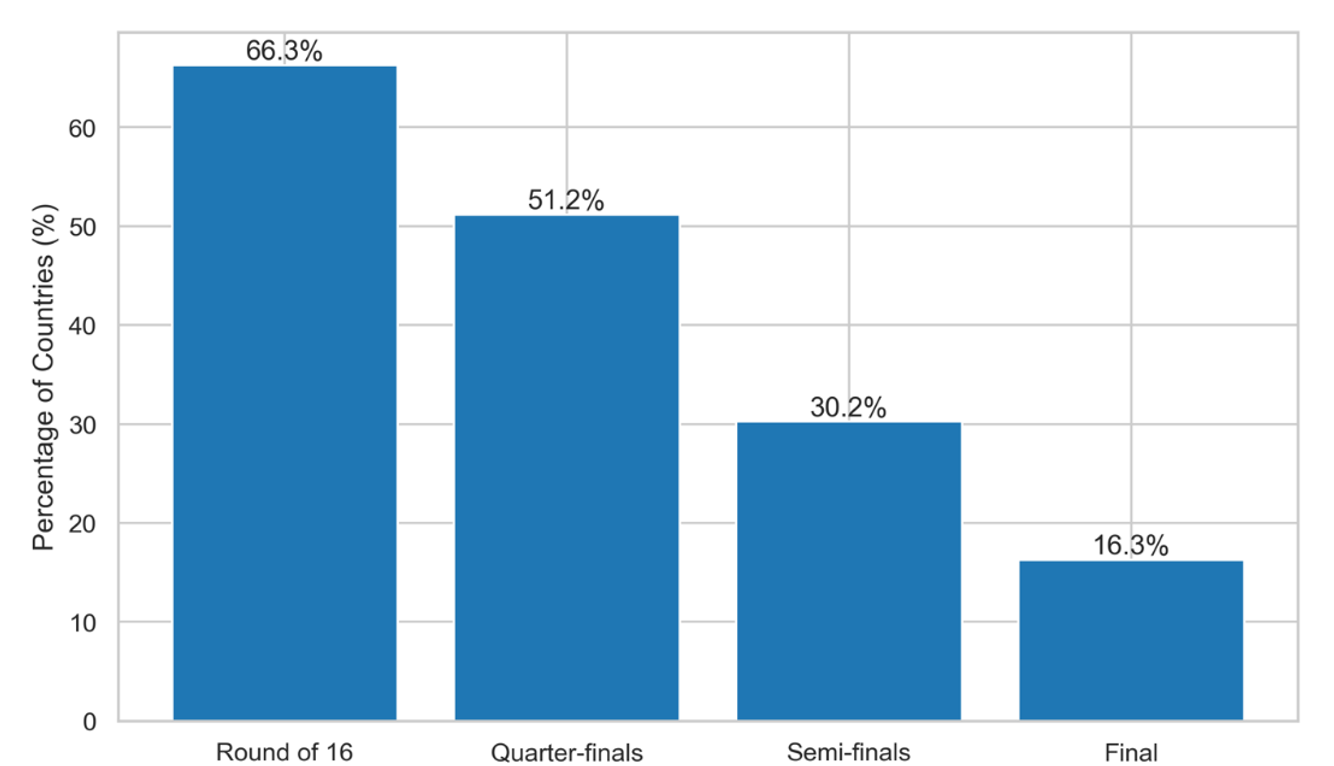
14 Nations have made it to a World Cup Final
However, when considering the proportion of teams that reached each stage on their World Cup debut, the likelihood decreases sharply. Just under 50% of teams progressed to the Round of 16 (or equivalent knockout stage), while fewer than 5% reached the final in their first appearance.
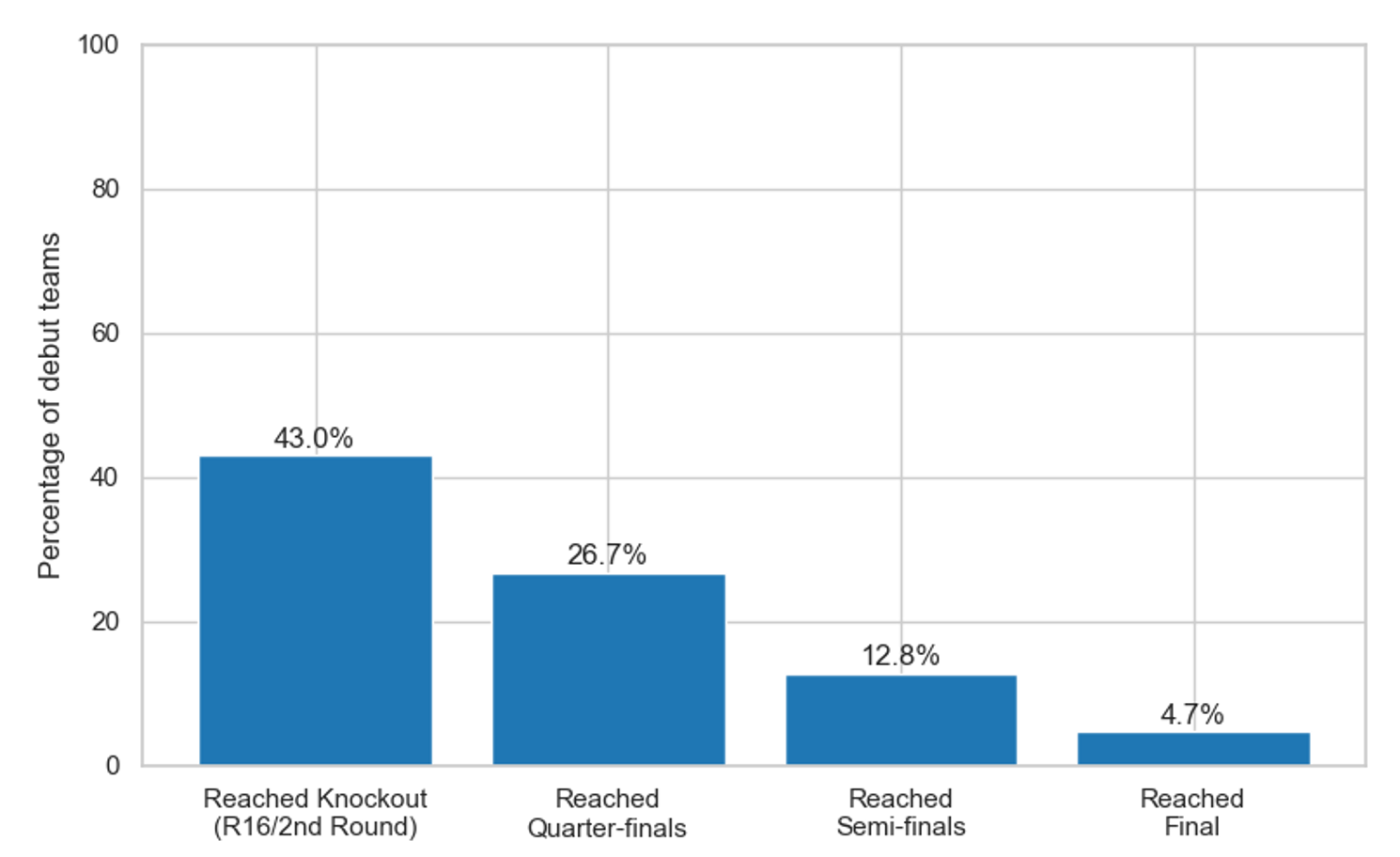
New participants most commonly finish in the group stages.
Since the initial years of the tournament, no team has reached the World Cup final in its debut appearance. The 1958 and 1966 tournaments each saw one debutant progress to the semi-finals; however, since then, only Croatia in 1998 has advanced beyond the quarter-finals in its first World Cup and no debutant has reached the final since 1934.
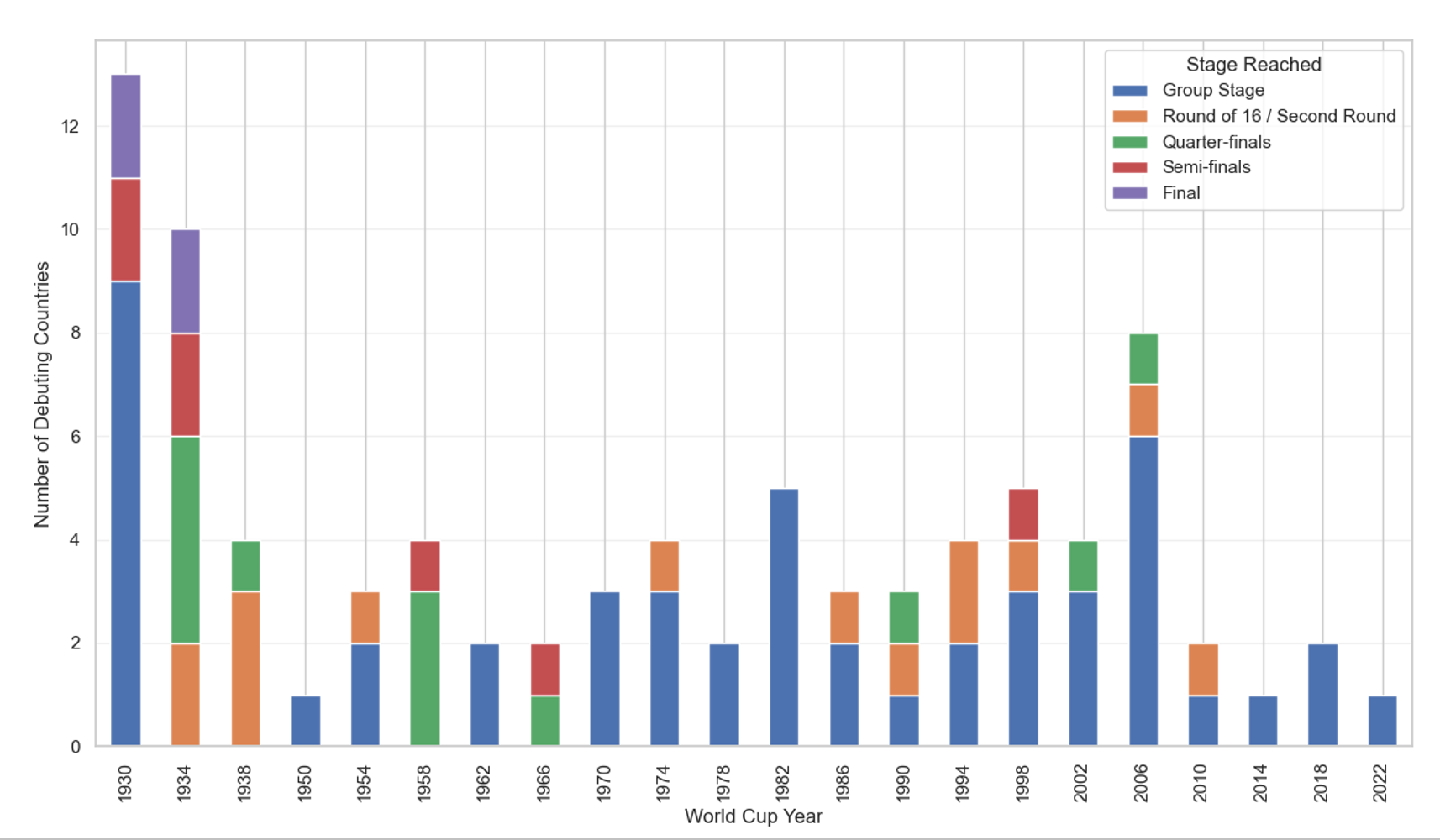
Croatia finished 3rd in 1998
In more recent tournaments, debutant teams have struggled to progress beyond the group stage, with Slovakia in 2010 being the most recent team to reach the Round of 16 (their only World Cup appearance to date).
History suggests that winning the World Cup is extremely difficult, with only eight nations ever lifting the trophy and no debutant reaching the final since the second edition of the tournament. However, this rarity is what gives rise to the compelling underdog narrative. If such achievements were common, they would not carry the same importance. Regardless of where Cabo Verde ultimately finishes, they have already succeeded, and their debut campaign has already produced some enduring memories.
The views expressed in this article are those of the author(s) or working group named below, and do not necessarily reflect the views of the Actuaries Institute. This work is licensed under a Creative Commons Attribution-NonCommercial-No Derivatives CC BY-NC-ND Version 4.0.

From model governance to machine learning, explore actuarial perspectives on data science and artificial intelligence
Subscribe to Actuaries Digital for free and receive the latest actuarial analysis, research, and commentary direct to your inbox