Interview
Career and Leadership
An actuary abroad: The many ways actuaries end up working overseas



Claim your CPD points
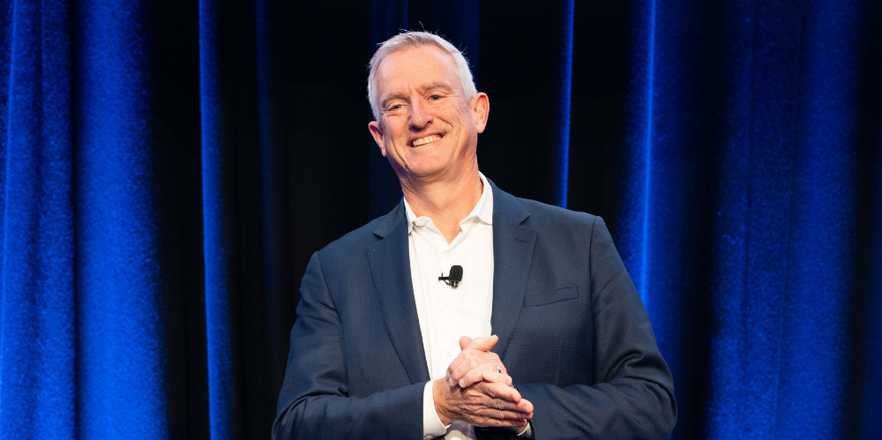
Akira Kinefuchi is an Actuarial Analyst in Aon's Japan team in London. He began his career as a graduate at Aon in Sydney, then transferred to Tokyo to stay connected to Japan's language, culture and business environment. After eight years in Tokyo, he transferred again to London at the end of 2024. He made both relocations without leaving Aon, and has now spent more than 11 years with the firm across three countries.
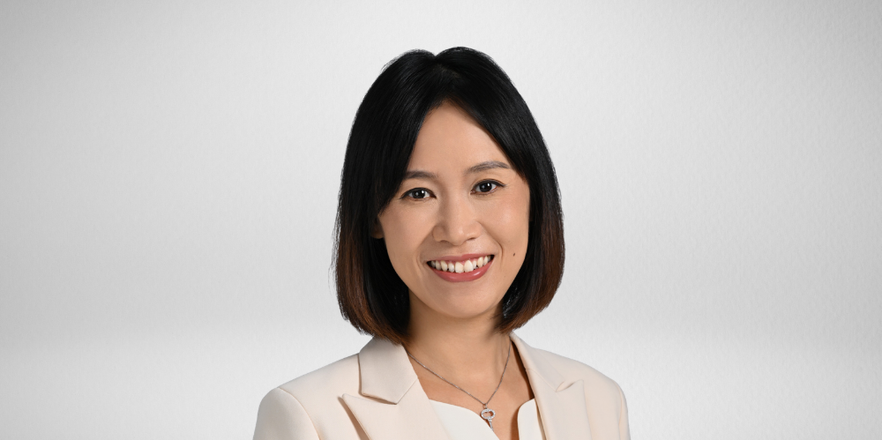
Xuejun Li spent nearly nine years in general insurance in Brisbane and Sydney before acting on a long-held curiosity about working in Asia. A recruiter introduced her to a role at the Global Asia Insurance Partnership in Singapore, where she is now an Associate Director. She changed country, employer and focus area in one step.
Akira Kinefuchi is an Actuarial Analyst in Aon's Japan team in London. He studied actuarial studies and economics at the Australian National University and joined Aon in Sydney as a graduate in 2015. He then spent eight years in Tokyo, working in catastrophe modelling and reinsurance pricing with a focus on international catastrophe business.
The decision was partly professional, but also personal. I was born and raised in Japan, though my parents' work meant I spent much of my schooling overseas, including Canada, Pakistan and Australia. By the time I started in Sydney, I had spent almost half my life outside Japan.
Australia felt comfortable, and I could easily have stayed. At the same time, I felt that if I did not work in Japan then, I might gradually lose touch with its language, culture and business environment. When the opportunity came earlier than expected, I treated it as a chance I might not get again.
Relocation sounds like one big decision, but it is really many smaller ones. The role is only part of it. Then come tax, visas, housing, banking, healthcare, childcare and the occasional form that appears just when you think you are finished.
Staying with the same firm made both moves far more manageable. It gave me continuity, but just as importantly, I had strong supporters and mentors on both sides who understood the move and helped me navigate it. Moving with family made that support even more important.
I had strong supporters and mentors on both sides who understood the move and helped me navigate it.
My advice is to appreciate others' groundwork, but be ready to own the transition yourself. Patience helps too, because even a well-supported move comes with small surprises.
I would not say I had to unlearn my Australian training. It gave me a strong base overseas, particularly in technical discipline, commercial judgement and explaining complex issues clearly. The bigger lesson was applying that training in a way that fits the local environment.
In Japan, that meant being humble about local customs, business etiquette and how decisions are made. A good qualification helps, but your usual style will not work everywhere. Actuaries are trained to adapt judgement to different assumptions, so this should come naturally, though it still takes effort. Showing willingness to communicate in Japanese also made a real difference.
London required a different adjustment. After eight years in Japan, I was used to thinking and working in a Japanese context. Returning to an English-speaking market meant being more explicit and more comfortable speaking up. Across all three countries, the lesson was the same: keep your core actuarial judgement, but be flexible in applying it.
My experience has been that the Australian qualification is well regarded in London, particularly in insurance and reinsurance. People may not always know the differences between the Australian and UK pathways, but they recognise the rigour behind the training.
It has also been a good conversation starter. Given the well-worn path from Australia to London, I half expected Australian actuaries to appear around every corner. That has not quite been my day-to-day experience, but Actuaries Institute events reminded me that many are nearby, just not always at the next desk.
I would encourage it. Australian actuarial training gives you a strong foundation, not only technically but also in how to think about uncertainty, communicate risk and exercise judgement. Those skills travel well.
Australian actuarial training gives you a strong foundation, not only technically but also in how to think about uncertainty, communicate risk and exercise judgement.
The advice changes by country. In some markets, the challenge is language and culture. In others, it is regulation, market structure or how decisions are made. Do your homework, be humble, and do not assume that what works in Australia will work elsewhere.
At the same time, trust the training. Actuarial work is not just mathematics. It is connecting numbers, judgement and reality in a way stakeholders can use. That is valuable anywhere. And while you are there, make the most of it. Travel, explore, and let the experience broaden your perspective. Life is too short not to enjoy it.
Xuejun Li is an Associate Director at the Global Asia Insurance Partnership (GAIP) in Singapore. She is a Fellow of the Actuaries Institute and a Chartered Enterprise Risk Actuary. Before relocating, she worked in general insurance at RACQ in Brisbane and then as a consultant at Quantium in Sydney, across reserving, regulatory reporting and capital modelling.
For most of those nine years I was in general insurance, starting in corporate roles and then moving into consulting. That gave me a solid understanding of the market and the industry, and I'm grateful for the breadth of work I got to be part of along the way. At the same time, I kept wondering what other paths were out there and what I hadn't tried yet. Coming from a Chinese background, Asian culture has always been a big part of who I am, and I'd long been curious about what it would be like to work in an Asian market. So, moving overseas, particularly to Asia, was always somewhere in the back of my mind.
Would I have gone earlier? Possibly, if it hadn't been for COVID. Equally, I think it was the right time for me. Everything I'd built up over those years is exactly what supports me now, in a role that draws heavily on understanding how insurance markets work.
It came through a recruiter I'd known for years. I'd mentioned to them a few years back that I was keen to work overseas at some point, so when this role came up, they reached out to me directly.
I was a bit nervous, to be honest. It was a big change on two fronts: a new focus area and a new country, all at once. Luckily the whole interview process was done online, and GAIP was great about helping me sort out the visa and being flexible on when I actually moved. My team made the whole thing feel smooth, and I'm especially thankful to my manager, Dickson Wong, and to former colleagues who'd made similar moves before me. They shared lots of tips and notes, and were understanding about the time I needed to settle into the new environment.
My current role is quite different from anything I'd done before, "non-traditional" as some might call it. It focuses on strengthening risk resilience across the region, particularly in ASEAN countries. In plain terms, that means making sure people, businesses and economies can absorb potential losses, whether through risk reduction, insurance or fiscal risk financing. The work spans academic and policy research, practical tools and strategic dialogues.
The biggest shift has been in who I'm talking to. In my earlier roles, I was very much inside the insurance world, speaking with people who already knew the market and the concepts. GAIP is a neutral tripartite platform bringing together industry, regulators and policymakers, and academia. A bit more than half of my stakeholders sit in the public sector, with the rest in the private sector and academia. Because the work is regional, those relationships span many jurisdictions rather than a single market.
Coordinating between those three sectors is a core skill and needs a delicate touch. The assumptions I used to take for granted don't always hold, especially with public sector stakeholders in jurisdictions where the insurance market is still developing. Taking academic research findings, translating them into commercial concepts, and then framing how the public sector should look at them is hard to do well, but it's where a lot of the value lies.
So, one thing I've learnt, and am still learning, is how to adapt the way I communicate with people from very different cultural and professional backgrounds. I wouldn't say I could never have picked this up in Australia, but it's something I'm developing here in a way I hadn't before.
Honestly, I wouldn't say my experience as a woman in the profession has been that different here compared with Australia. What has been different is my immediate environment: my current team is predominantly female, and our female CEO, an inspiring life actuary who's worked across multiple regions, has been a great support through my transition.
Beyond my own team, I've also met many female leaders across the insurance industry here. So, if the question is really about whether there's a glass ceiling for young female actuaries, my sense is that there are real opportunities in Singapore, and it's definitely worth a try.
Many people hold a stereotype of very long working hours and a harsh working culture in Asia, and I'll admit I half expected it too. So far it hasn't been like that at all, though that may be unique to my current team. It's a bit like consulting: there are days when we need to work late to get things over the line, but the team culture is very similar to what I experienced in Australia. We have our relaxed days and team drinks, and being part of a small team has brought us closer together.
What turned out harder than expected? The weather, for sure. It takes some time to adjust. On the flip side, being based in Asia brings the rest of the world so much closer, and from a personal life perspective it's opened up far more opportunities to travel around the region.
Know an Australian-trained actuary building a career overseas? An Actuary Abroad will continue into 2027 as a regular feature, profiling Australian-trained actuaries in Asia and beyond. We would like to hear their story.
The views expressed in this article are those of the author(s) or working group named below, and do not necessarily reflect the views of the Actuaries Institute. This work is licensed under a Creative Commons Attribution-NonCommercial-No Derivatives CC BY-NC-ND Version 4.0.

From career pivots to professional development, explore insights and advice from actuaries at every stage of their career
Subscribe to Actuaries Digital for free and receive the latest actuarial analysis, research, and commentary direct to your inbox