Education
Career and Leadership
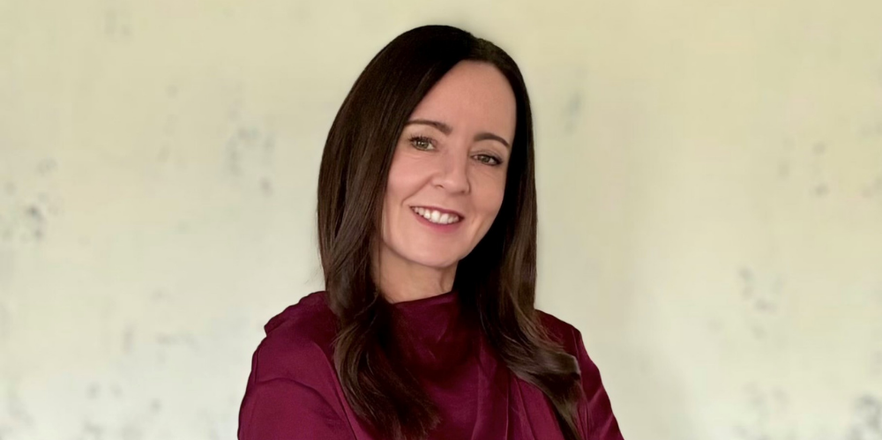
Career Case Study: Nathasia Kumala — an actuary across Asia and Australia



Claim your CPD points
Here, she shares what shaped her path, why human judgement remains the profession's sharpest edge and what she'd tell anyone just starting out.
Honestly, it started with my affinity for maths. Growing up, maths was always my favourite subject — so the idea of a career built around quantitative thinking, understanding uncertainty and pricing risk stood out. Though I must admit that at the outset, I barely knew what an actuary actually does!
What drew me further in was the reputation of the profession. Actuaries are respected and taken seriously for their rigour and their unique skillset. I've always believed that challenging myself is where I find the most growth and the actuarial path has proven to be the perfect avenue to channel exactly that.
It started with a Google search. I typed something like "what's a good career for someone whose favourite subject is maths?" and actuarial science kept coming up. I looked into it, rolled the dice and enrolled in a Bachelor of Actuarial Studies at UNSW.
I’d say my journey has been fairly typical — no dramatic plot twists. But one thing I didn't fully appreciate when I first started is just how broad the profession is. There are so many paths and specialisations to explore — insurance, banking, investments, data, the list goes on!
I've been lucky enough to experience a slice of that breadth myself, starting my career in life insurance in Asia before making the move to general insurance in Australia three years ago.
Doing well in your coursework gets you to the starting line, but having a competitive edge is what matters most. I tried to be proactive about both my academic and professional development early on, which more often than not, meant stepping out of my comfort zone. I reached out to people I didn't know, spoke to actuaries at career fairs, signed up for mentoring programs and more.
What I found is that people are willing to help when they can see your commitment and enthusiasm. The actuarial community is smaller than it looks from the outside and that works in your favour if you put yourself out there. All that effort eventually paid off and I was fortunate enough to land my first role through exactly those steps.
I’d say talking to people, having strong commitment and the courage to try out new things.
I've been lucky to have leaders, colleagues and peers who genuinely shaped how I think. Watching someone translate complex technical work into clear commercial insights, navigate a difficult conversation, teaches you things no exam syllabus covers.
Beyond that, I've been deliberate about surrounding myself with brilliant people outside of actuarial too. Different perspectives make you see things in a more holistic manner and that breadth consistently makes you better at your job.
And then there's grit, not just for the exams, but for the career itself. Pushing toward the next opportunity before you feel ready, saying yes when it's easier to say not yet — that's a different kind of hard and it's ongoing.
Two countries, two very different corners of actuarial — that's probably the best way to sum it up. Starting out in life insurance in Asia gave me a solid technical foundation and threw me into a fast-moving, commercially-driven environment early on.
Moving to Australia and into general insurance felt like a fresh start and it has been. The work that has shaped me most is navigating the commercial market cycle, particularly the current soft market.
When competition heats up and rates come under pressure, the challenge becomes really interesting: how do you help a business keep growing while still maintaining a healthy risk pool? The environment has pushed me to think from various perspectives, including segmentation, figuring out which risks are worth competing for and communicating that clearly to underwriters and the broader business.
Honestly, I'm still figuring it out. We're living in an era where AI can handle a lot of the technical heavy lifting, which is genuinely exciting, but it also raises the question: where do actuaries really come in and add value?
For me, the answer has always been on the human judgement side of things. Technical skills can be replicated. The ability to build trust with an underwriter, claims manager, read a room, sense-check a result that looks off and translate a complex pricing analysis into something someone can actually act on, that's harder to automate. If anything, technology has made those skills more important, not less. That’s where I'm focusing to continually hone on.
I would say the most prominent advantage is credibility. The rigour associated with the actuarial qualification garners external recognition and respect, even when people are not entirely sure what an actuary does. Actuaries are known for their analytical skills and fact-based approach and that means your opinion carries weight in the room.
In addition, actuarial training fosters something less tangible — discipline and character. Balancing work and study can be tough. Navigating that phase itself builds a kind of grit that carries over into your professional life. When you face complex problems, difficult conversations or high-stakes decisions at work, you've already proven to yourself that you can push through. And honestly, that quiet confidence makes more of a difference in the workplace than people realise.
To be very frank, I am still struggling with defining clearly what an "actuary" does — let alone actuarial thinking. My own family still doesn't fully understand what I do. They know it involves gruelling screen hours and apparently a lot of Excel. I've just accepted that at this point.
When I think about it simply though, actuarial thinking is about asking "what if?" before it matters. At its core, it's a fact-based approach — you look at the data, understand the context and form a view of what the future could look like. That means keeping a close eye on trends, regulatory changes and emerging shifts in the environment, and using those as indicators to inform decisions.
It's not just about crunching numbers. It's about telling a story with those numbers, anticipating what's coming and helping people make better decisions in the face of uncertainty.
What are the three highlights of your career so far?
How would you describe yourself in one sentence?
Actuary first, with pilates, good music and occasional matcha squeezed in between.
What advice would you give to someone just starting out?
Stay curious. Ask questions and be proactive. Reach out, put your hand up and say yes to new opportunities/challenges.
And remember that being an actuary is so much more than numbers, charts and graphs. The technical foundation is essential, but it's only the beginning. The most valuable things you'll develop over a career is judgement, communication, relationships, the ability to see around corners. None of those come from a textbook. They come from staying present, staying open and always being hungry for more!
The views expressed in this article are those of the author(s) or working group named below, and do not necessarily reflect the views of the Actuaries Institute. This work is licensed under a Creative Commons Attribution-NonCommercial-No Derivatives CC BY-NC-ND Version 4.0.

From career pivots to professional development, explore insights and advice from actuaries at every stage of their career
Subscribe to Actuaries Digital for free and receive the latest actuarial analysis, research, and commentary direct to your inbox