Banking
Introduction to securitisation




Claim your CPD points
The actuarial profession emerged in the 17th and 18th centuries to solve a critical problem facing early life insurance companies: ensuring sufficient funds to pay for future death benefits. These first actuaries developed analytical tools that remain foundational today, transforming life insurance from speculation into a sustainable, mathematically rigorous business.
As the profession matured, actuaries discovered their blend of skills across mathematics, financial expertise, data analysis and business understanding had broader applications, in other fields where adequate benefits had to be balanced with long-term sustainability. The 20th century saw actuaries expanding into general insurance, health insurance and superannuation.
In the 21st century, actuaries are advising organisations across various sectors on complex risk landscapes.
Securitisation is another area where actuaries can apply their skills.
This article will give a brief background to securitisation, how it started in Australia and the state of the industry today.
Later articles in this series will go into greater detail, explore the parallels between securitisation and life insurance and describe how the actuarial skillset is well-suited to pursue opportunities in this growing industry.
In Australia, the early adopters of securitisation were non-bank mortgage originators who needed to solve a problem - who would give them the money to lend.
They could try to use third-party money in the traditional sense, that is, to borrow it from banks (utilise their balance sheet), solicitor funds, or fund managers via some form of note or lien on the mortgage asset. However, in the late 1970s, the US market developed securitisation as an innovative and potentially more efficient product to fund mortgages.
Australia’s securitisation industry began when Aussie Homes Loans and Interstar adapted this American invention to the Australian context to raise funds.
At its core, securitisation is a balance sheet management tool. It is a method used by non-bank lenders to raise funds, given they lack a deposit base and by banks to raise additional funds via alternative sources and/or reduce the capital intensity of their lending.
In a nutshell, securitisation comprises the following:
Further features and benefits of securitisation will be discussed later in this series.
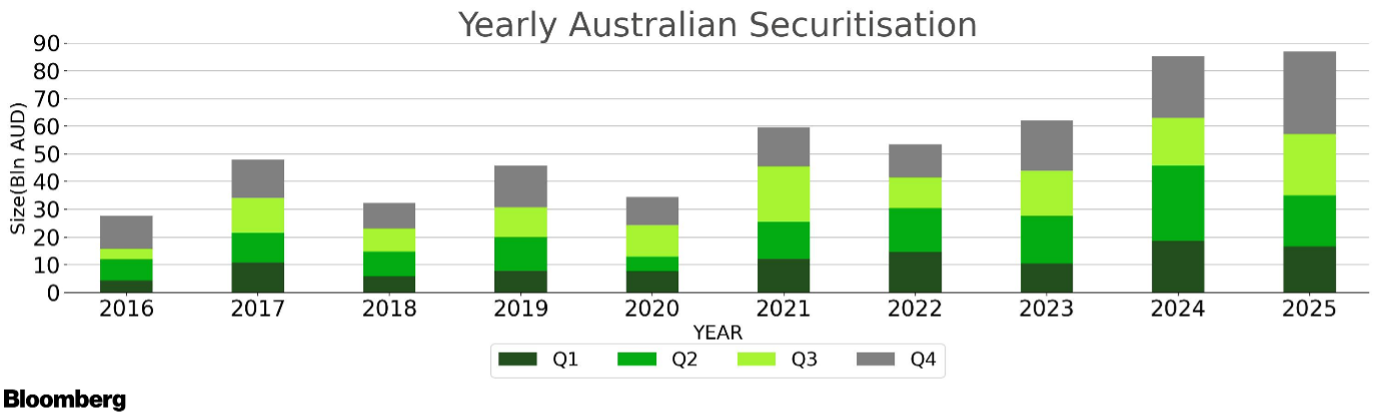
The securitisation industry in Australia is growing.
Australian securitisation issuance in 2025 [1] (the total amount of funding raised) exceeded $80bn and was roughly equal to the total Australian general insurance revenue in the same period [2] .
Source: Bloomberg | https://www.securitisation.com.au/market-statistics
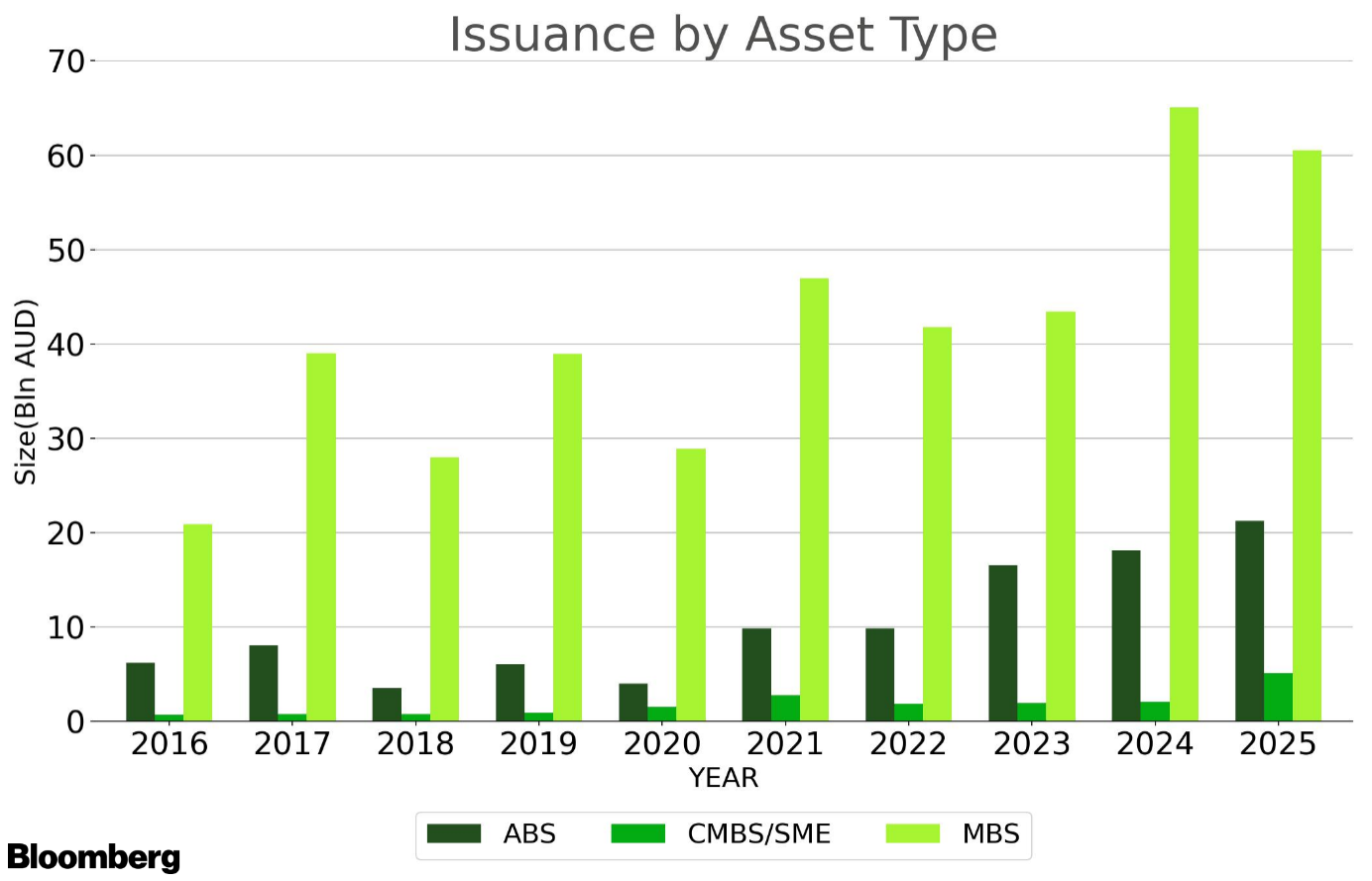
The most commonly securitised assets in Australia are residential mortgages (Mortgage Backed Securities, “MBS”), however, commercial loans (Commercial Mortgage Backed Securities, “CMBS” / loans to Small and Medium Enterprises, “SME”) and asset finance (Asset Backed Securities, “ABS”) are also growing in popularity. Major asset categories within ABS include automotive loans, credit cards, consumer lending and equipment finance.
Source: Bloomberg | https://www.securitisation.com.au/market-statistics
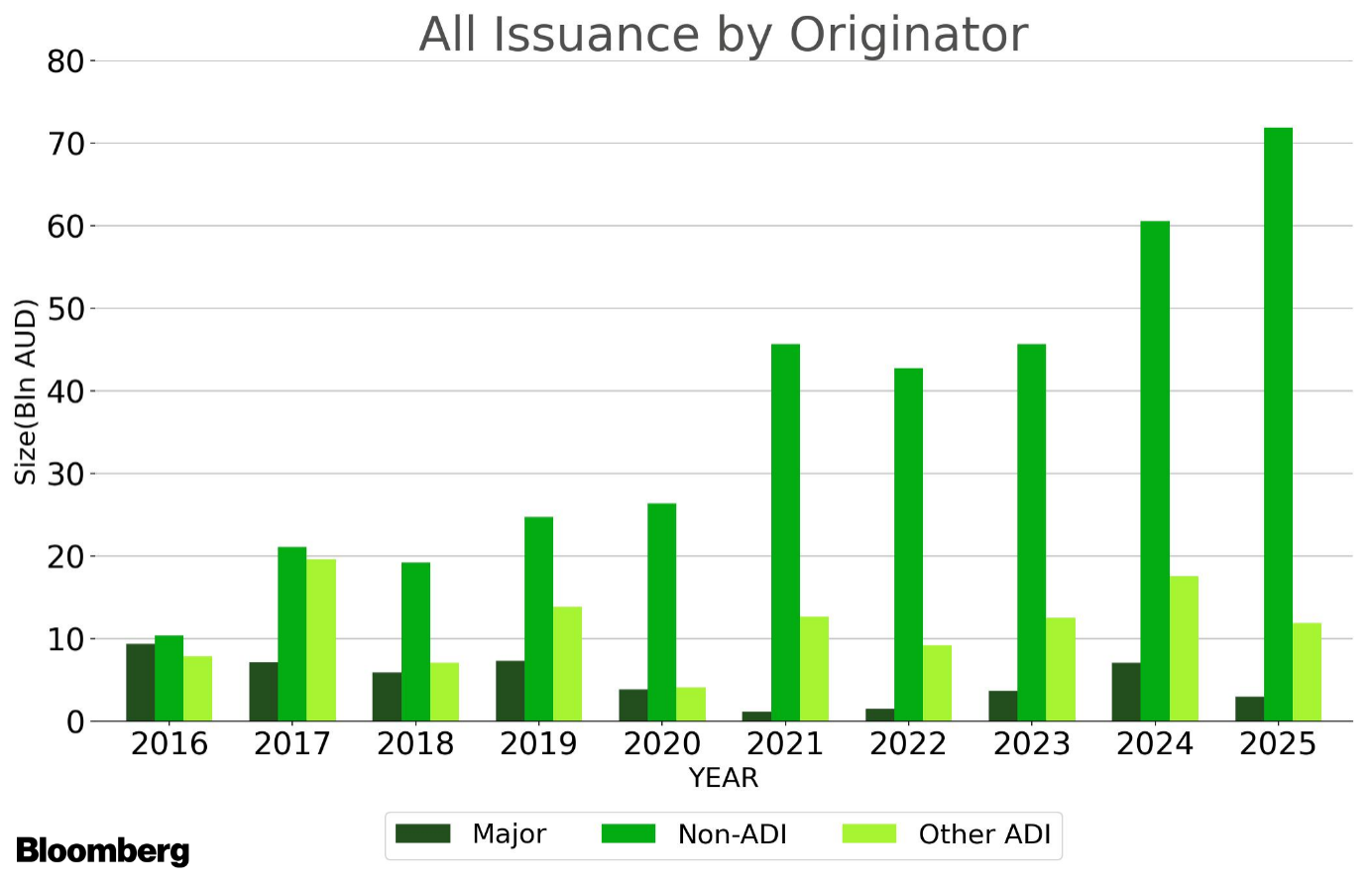
The vast majority of issuance in 2025 originated from non-bank lenders (“Non-ADI”). The major Australian banks (“Major”) and other authorised deposit-taking institutions (i.e. banks, “Other ADI”) contribute a smaller share of total issuance.
Source: Bloomberg | https://www.securitisation.com.au/market-statistics
The sustained growth of the securitisation industry in Australia can be attributed to a variety of factors, including:
The growing securitisation market in Australia improves the availability of funding for non-bank lenders, increasing competition and facilitating the entry of new lending products into the market. This can have a positive influence on consumer outcomes through increased product choice and price competition.
Further articles in this series will delve deeper into the concepts of securitisation and explain how the actuarial skillset can help us pursue career opportunities in this growing industry.
Securitisation is also covered in the Actuaries Institute’s Banking subject as part of the Fellowship program. Find out more.
Further market statistics, reference materials and training opportunities are available through the Australian Securitisation Forum website.
References
[1] https://www.securitisation.com.au/market-statistics
[2] https://www.apra.gov.au/quarterly-general-insurance-performance-statistics
The views expressed in this article are those of the author(s) or working group named below, and do not necessarily reflect the views of the Actuaries Institute. This work is licensed under a Creative Commons Attribution-NonCommercial-No Derivatives CC BY-NC-ND Version 4.0.


Explore actuarial perspectives on credit risk, capital management, and the evolving regulatory landscape in Australia's banking sector
Subscribe to Actuaries Digital for free and receive the latest actuarial analysis, research, and commentary direct to your inbox