Life Insurance
Genetic testing and life insurance under the new federal ban




Claim your CPD points
On 16 September 2026, Treasury issued the final regulations [1] supporting the legislation, effective on 8 October 2026, which prohibits life insurers from using protected genetic information in underwriting, unless this information is volunteered and its use would result in a favourable outcome for a policyholder (the Treasury Laws Amendment (Genetic Testing Protections in Life Insurance and Other Measures) Act 2026) [2].
The Act and the regulations work together. Understanding them rests on three questions: what counts as genetic testing, what information is protected genetic information and what constitutes an offence.
The longer-term implications for insurers are uncertain. How far applicants’ private knowledge of their own genetic risk will change who takes out cover, and how much, will emerge only from claims experience over many years. The Act anticipates this, requiring a review after each fifth anniversary of commencement to identify any unintended consequences. The impact is therefore difficult to be certain of today and worth monitoring closely.
The Act defines “genetic testing” very broadly. It covers analysis of a person’s genetic material and extends to tests of proteins, biomarkers and metabolites where these are used to infer genetic variants or predict future disease. Read literally, this could reach routine underwriting investigations such as blood tests, although the Explanatory Memorandum states that clinical tests unrelated to a person’s genetic information are not intended to be captured.
“Protected genetic information” is built on the definition of genetic testing. It is information about the genetic testing of a person or a blood relative: the results and also the fact that a test has been taken, is intended or has been recommended. Protection attaches to the testing and does not depend on the result.
The key boundary is between a genetic predisposition and a disease. A predisposition identified by genetic testing, by the individual or a genetic relative, is protected: it cannot be used in underwriting or treated as an undisclosed pre-existing condition when assessing a claim. A clinically diagnosed disease is not protected, even where genetic testing informed the diagnosis, but the regulations go further than the Act and apply this exception only if signs and symptoms had manifested when the contract was entered into.
The regulations prescribe seven categories of hereditary predisposition, with examples that are expressly not exhaustive. Susceptibility to polygenic conditions, caused by many small gene variants, such as coronary artery disease and diabetes, is also protected.
A breach occurs when an insurer makes a decision on a life insurance contract where protected genetic information was solicited (requested, incentivised or otherwise encouraged) or used in underwriting. This is a strict liability offence, to which civil penalties may also apply. The Australian Securities and Investments Commission (ASIC) monitors and enforces the ban and, under the regulations, can issue infringement notices. Breaches are most likely to arise in underwriting rules, the design of applications and questions, the handling of medical evidence and adviser interactions.
While the restriction on the use of such information creates a structural information asymmetry that may give rise to insurance anti-selection, this is not absolute, and the risk may be less than what it seems on face value. There are various factors contributing to this, which are discussed below.
The size of the effect on retail life insurance depends on the seven factors in Figure 1. The first two are expected to change over time and need monitoring. The second is the most complex, as how well a genetic result predicts disease depends on a set of linked characteristics of the variant and the condition.
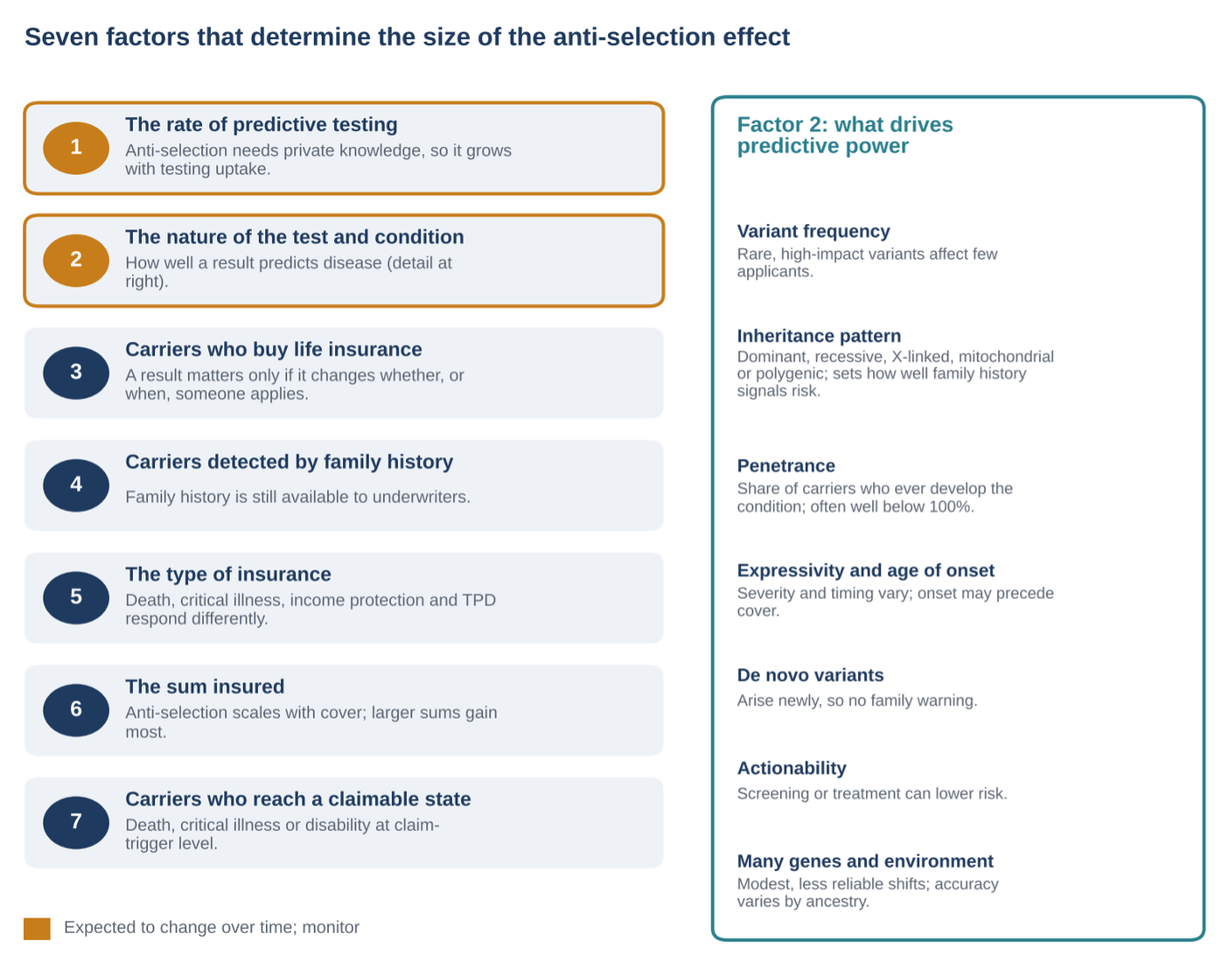
Figure 1: Factors determining the size of the anti-selection effect.
The immediate impact on life insurers is operational, as insurers have had to adjust underwriting processes and procedures to comply with the new requirements.
The impact on information asymmetry and anti-selection is harder to anticipate. It may be limited at first, as the rate of predictive testing is currently low (Medicare covers testing only where criteria are met). Testing rates are likely to grow over time, and this needs monitoring.
Penetrance also varies significantly (Figure 2). For many predispositions, the lifetime risk is far below 100%, because the wider genomic context, hormonal, lifestyle and environmental factors and age all contribute. A genetic predisposition therefore rarely implies a binary outcome, but represents risk somewhere on a continuum [3].
Conditions with penetrance approaching 100% typically show up in childhood (Autosomal Recessive Polycystic Kidney Disease, Gorlin Syndrome) or from the teenage years to the early 20s (Familial Hypercholesterolaemia, Friedreich Ataxia, Alport Syndrome, Li-Fraumeni Syndrome), so they are likely to be diagnosed before insurance is typically purchased.
The exception is Huntington disease (HD), with symptoms appearing between ages 30 and 50. HD has 100% penetrance only at 40 or more repeats of the genetic sequence [4], which is rare, occurring in less than 0.007% (1 in 15,000) of Australians [5]. At 36 to 39 repeats, the risk of developing the disease varies from 10% to 68%.
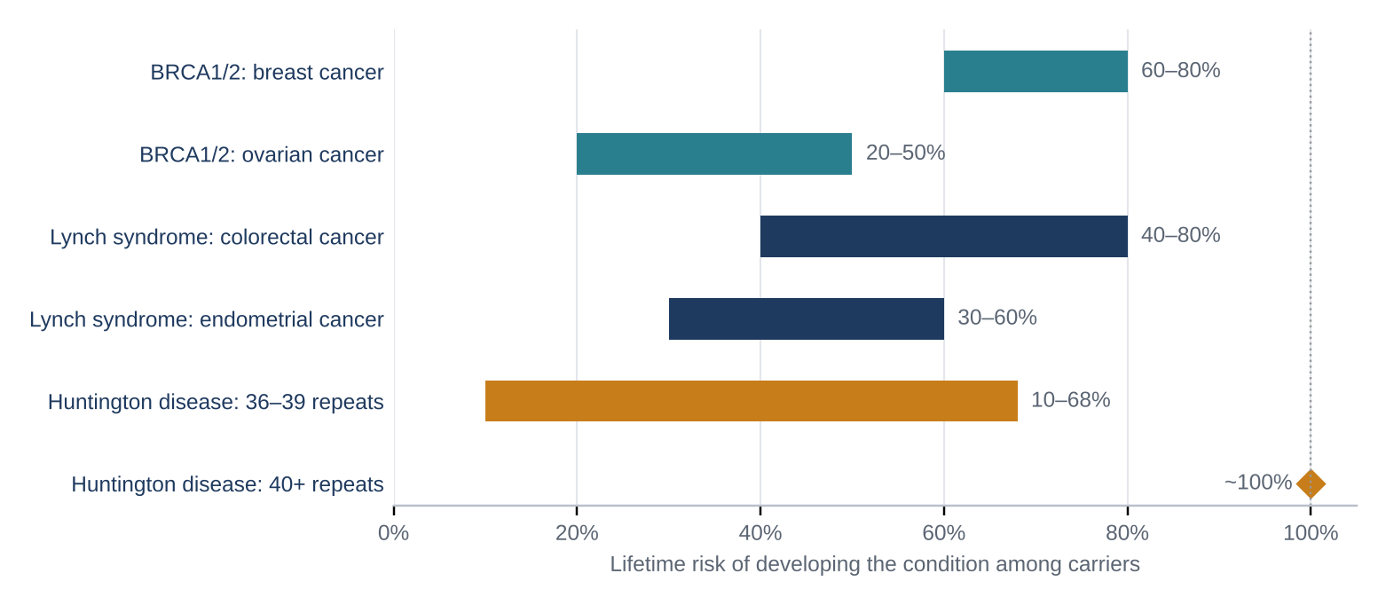
Figure 2: Lifetime risk of developing the condition among carriers, by predisposition. Sources: [4], [6]–[10].
Predictive testing is often offered where a result can be acted on, either to reduce the risk of disease or to inform reproductive, life and family planning decisions. The first matters most for life insurance, because reducing risk benefits the individual, society and also insurers.
Hereditary cancer predispositions such as BRCA1/BRCA2 and Lynch syndromes are relatively rare in the general population, with a prevalence of roughly 0.3%. Their lifetime cancer risks are high but well below 100% [6] [7] [8] [9] [10], so many carriers will never get cancer.
In both cases, these risks can be significantly reduced through earlier and enhanced screening (annual MRI, mammography, colonoscopy) and risk-reducing surgery [11]. Knowledge of a genetic predisposition thus enables prevention or earlier detection, reducing severity and improving survival rates.
This is an upside of the ban for both society and life insurers. The Explanatory Memorandum to the Act records that concern about access to insurance was discouraging people from clinical genetic testing that may identify a need for potentially life-saving treatment. Removing that deterrent should mean more people learn of a risk while it can still be reduced. For insurers, earlier detection and prevention can be expected to lower the claims these conditions would otherwise produce, partly offsetting the cost of anti-selection.
A metabolic predisposition, Familial Hypercholesterolaemia (FH), is another common genetic disorder, occurring in around 0.4% to 0.5% of the population. The presence of certain genetic mutations causes high levels of low-density lipoprotein (LDL) cholesterol, which increases the risk of early heart attack or ischaemic stroke. High LDL cholesterol levels manifest from birth in someone with a FH predisposition. If someone with untreated FH applies for insurance, high cholesterol levels will be picked up as part of the normal underwriting process. If identified early, preventive medication such as statins [12] and a healthy diet are highly effective in returning affected individuals to a normal life expectancy. However, it is estimated that only around 10% of people with FH are aware of it, and therefore, it is not effectively managed [13].
Family history can continue to be considered as part of the underwriting process and will (at least partly) serve as a risk indicator for many of these conditions. For example, a family history of heart attacks at a young age (under 55 for men and under 65 for women), combined with high cholesterol levels across generations, is a strong indicator of FH and cardiovascular risk.
People motivated to get genetic tests are often those with a personal or family history of cancer diagnosed at an early age [14]. However, the usefulness of family history as a risk indicator depends on whether the condition is inherited or arises from a de novo mutation, whether it passes through unaffected parental lines (e.g. BRCA1/2), whether it is autosomal dominant or recessive, and the penetrance and expressivity of the condition. HD is autosomal dominant, so if one parent has the condition, there is a 50% chance it has been passed on. In recessive conditions, parents may be unaffected carriers, so a family history is an imperfect indicator: relatives can be affected without the individual inheriting the variant, and the individual can carry it without any apparent family history.
In summary, while the knowledge of a genetic predisposition may create increased anti-selection opportunities, there are many factors which mean the outcome is not definitive, thus potentially diluting the risks to life insurance industry sustainability. While impacts are expected to arise over a long period, the Genetics Sub-Committee will be considering what data will be useful to monitor various factors that will impact the ultimate outcome – this will be discussed in a future article.
Because regulators can issue infringement notices without a full litigation process or a high evidentiary burden, insurers will need strong controls and compliance monitoring over the data captured for underwriting and claims assessment.
[1] https://www.legislation.gov.au/F2026L01225/asmade/2026-09-16/text/original/pdf
[2] https://www.aph.gov.au/Parliamentary_Business/Bills_Legislation/bd/bd2526/26bd037
[3] Pal T. Christopher J., Astiazaran-Symonds E. et al. Consideration of inherited cancer risk on a continuum: An international and multidisciplinary perspective: A points to consider statement of the American College of Medical Genetics and Genomics (ACMG), Genetics in Medicine, Volume 28, Issue 3, 2026. https://doi.org/10.1016/j.gim.2025.101659
[4] https://medlineplus.gov/genetics/condition/huntingtons-disease/#causes
[5] https://www.genetics.edu.au/PDF/Huntington_disease_genetic_testing_booklet-CGE.pdf
[6] https://www.cancer.gov/about-cancer/causes-prevention/genetics/brca-fact-sheet
[7] Evans DG, Woodward E, Harkness EF, et al. Penetrance estimates for BRCA1, BRCA2 (also applied to Lynch syndrome) based on presymptomatic testing: a new unbiased method to assess risk? Journal of Medical Genetics 2018;55:442-448. Penetrance estimates for BRCA1, BRCA2 (also applied to Lynch syndrome) based on presymptomatic testing: a new unbiased method to assess risk? | Journal of Medical Genetics
[8] Evans DG, Shenton A, Woodward E, Lalloo F, Howell A, Maher ER. Penetrance estimates for BRCA1 and BRCA2 based on genetic testing in a Clinical Cancer Genetics service setting: risks of breast/ovarian cancer quoted should reflect the cancer burden in the family. BMC Cancer. 2008 May 30;8:155. doi: 10.1186/1471-2407-8-155. PMID: 18513387; PMCID: PMC2447846. https://pmc.ncbi.nlm.nih.gov/articles/PMC2447846/
[9] https://www.canceraustralia.gov.au/impacted-by-cancer/lynch-syndrome
[10] Win A, Dowty J, Reece J et al. Variation in the risk of colorectal cancer in families with Lynch syndrome: a retrospective cohort study. The Lancet Oncology, 2021; 22, 1014-1022. https://www.thelancet.com/journals/lanonc/article/PIIS1470-2045(21)00189-3/abstract
[11] Abdel-Razeq H, Mansour R. Screening, Risk Reduction Strategies, and Clinical Management of Unaffected Carriers of BRCA1 or BRCA2 Pathogenic Variants. World J Oncol. 2025 Dec 17;17(1):14-24. https://pmc.ncbi.nlm.nih.gov/articles/PMC12758042/
[12] https://familyheart.org/fh-treatments
[13] FH Australia https://fhaustralia.org.au/about-fh/
[14] https://www.cancer.gov/about-cancer/causes-prevention/genetics/genetic-testing-fact-sheet
Read more about the use of genetic testing in life insurance in our previous article here .
The views expressed in this article are those of the author(s) or working group named below, and do not necessarily reflect the views of the Actuaries Institute. This work is licensed under a Creative Commons Attribution-NonCommercial-No Derivatives CC BY-NC-ND Version 4.0.


Explore actuarial thinking on life insurance pricing, product design, regulation and the evolving risk landscape
Subscribe to Actuaries Digital for free and receive the latest actuarial analysis, research, and commentary direct to your inbox