Life Insurance
Mortality in First Eight Months of 2025 in line with Prediction



Claim your CPD points
| Key points:
|
We measure excess deaths by comparing actual deaths each week to a baseline. The 2025 baseline is based on 2024 mortality and expected improvement rates. Since 2024, the baseline has included an allowance for COVID-19. This is necessarily a much more approximate estimate than other potential causes of death, because of the limited data from which to estimate both the timing and severity of waves of COVID-19.
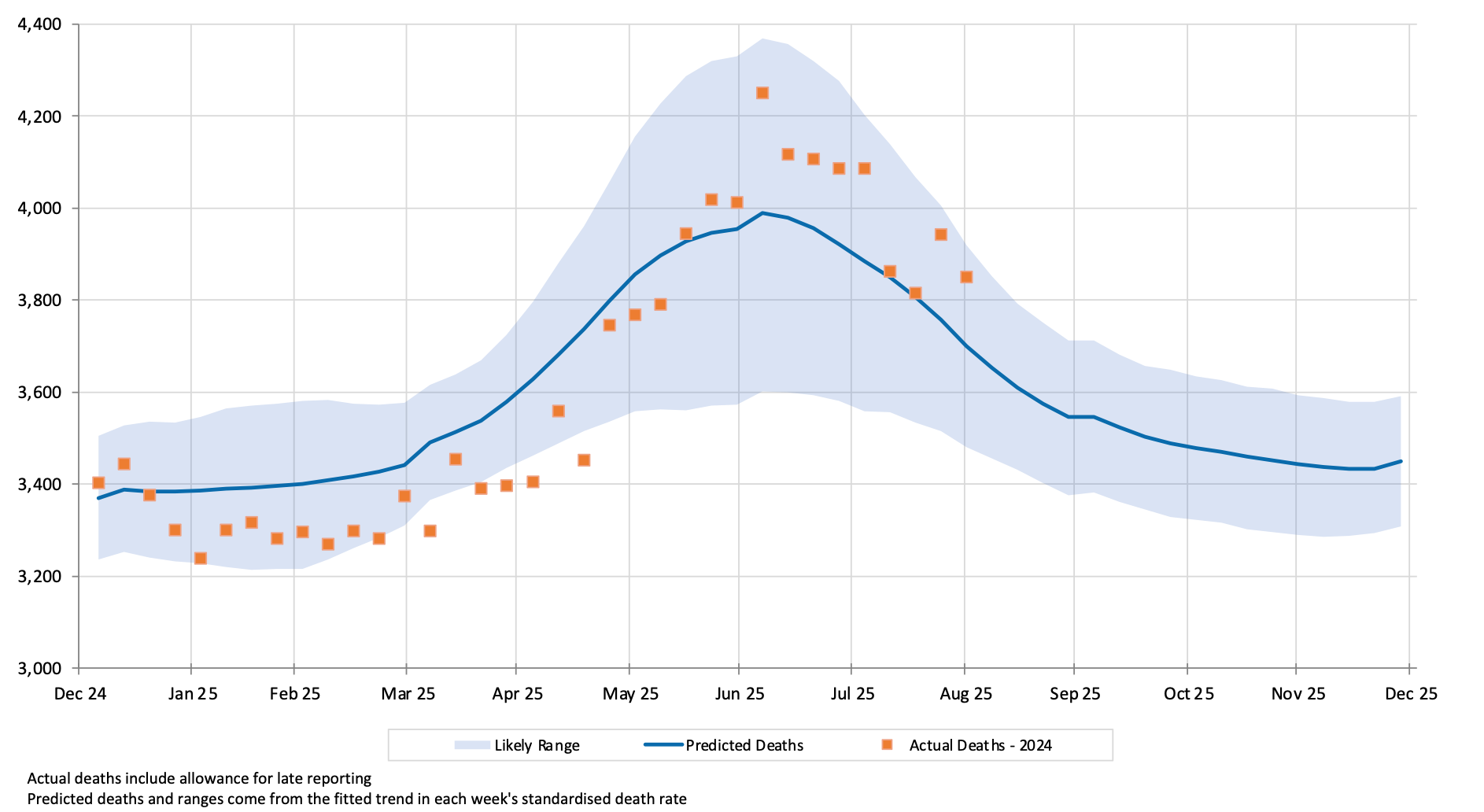
Figure 1 – Weekly actual and predicted deaths – all causes
Figure 1 shows the results of our analysis of the experience up to August 2025 and the 95% prediction interval. The 95% prediction intervals shown are based on our analysis for the 2024 baseline, representing pre-pandemic variance that excludes COVID-19 variability. As a result, the prediction interval shown in Figure 1 is narrower than the true 95% prediction interval that includes COVID-19 death variance.
Actual weekly deaths have mostly been within the 95% prediction interval. However, for the first five months of the year, they were mostly below the prediction, and mostly above the prediction since mid-June, coinciding with the spike in Influenza cases.
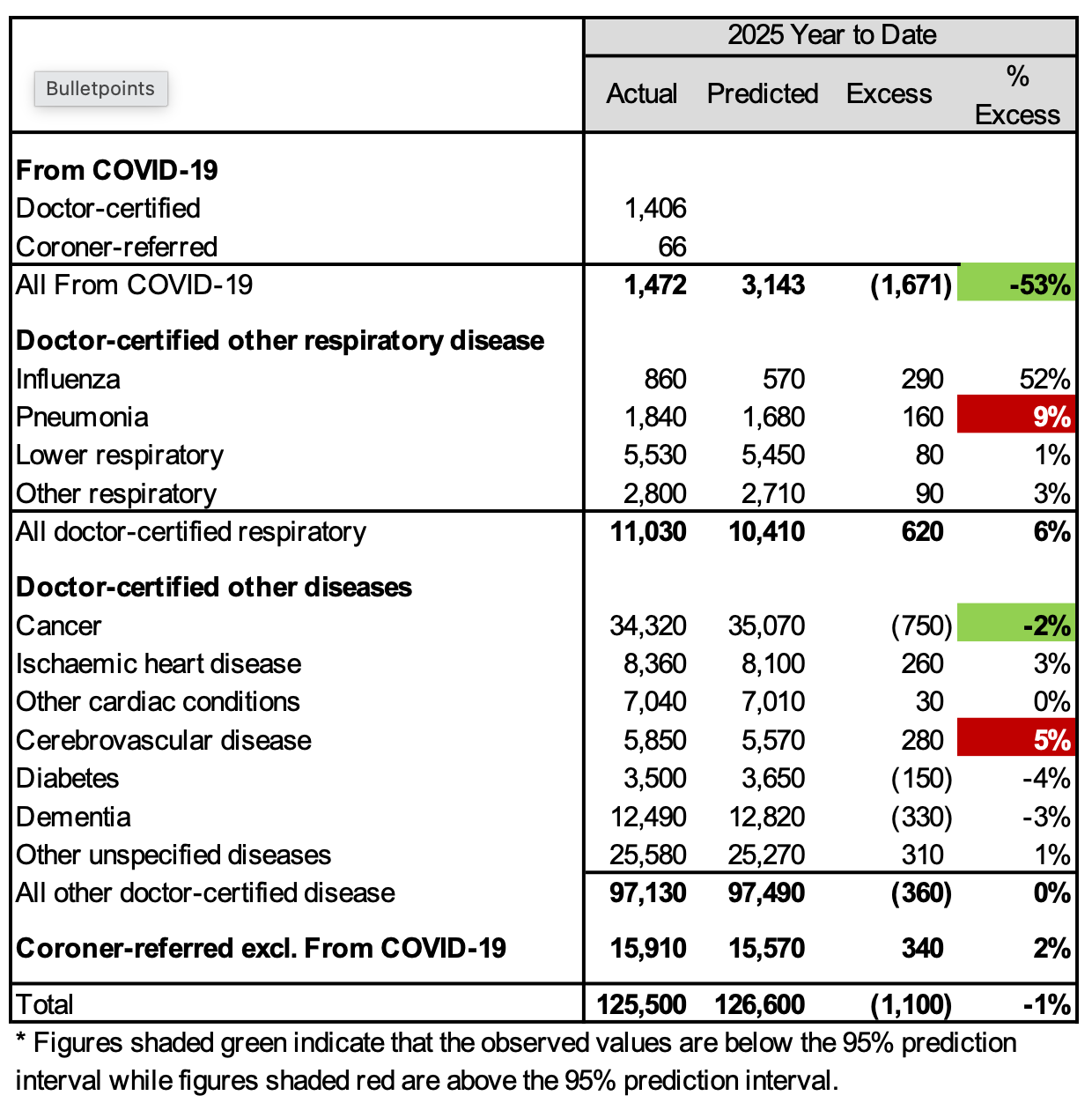
Table 1 – Excess deaths in Australia (v 2024-based expectation) – by cause of death for Jan-Aug 2025
Table 1 shows our estimate of excess deaths broken down by cause [1] . In the first eight months of 2025:
Figure 2 shows actual deaths from COVID-19 and COVID-19 related deaths from the start of 2022. We have also shown our predicted values for deaths from COVID-19 for 2024 and 2025. For 2024, the prediction assumed a large reduction in mortality from 2023 that did not eventuate. For 2025, the baseline assumes a similar level of COVID-19 mortality to 2024.
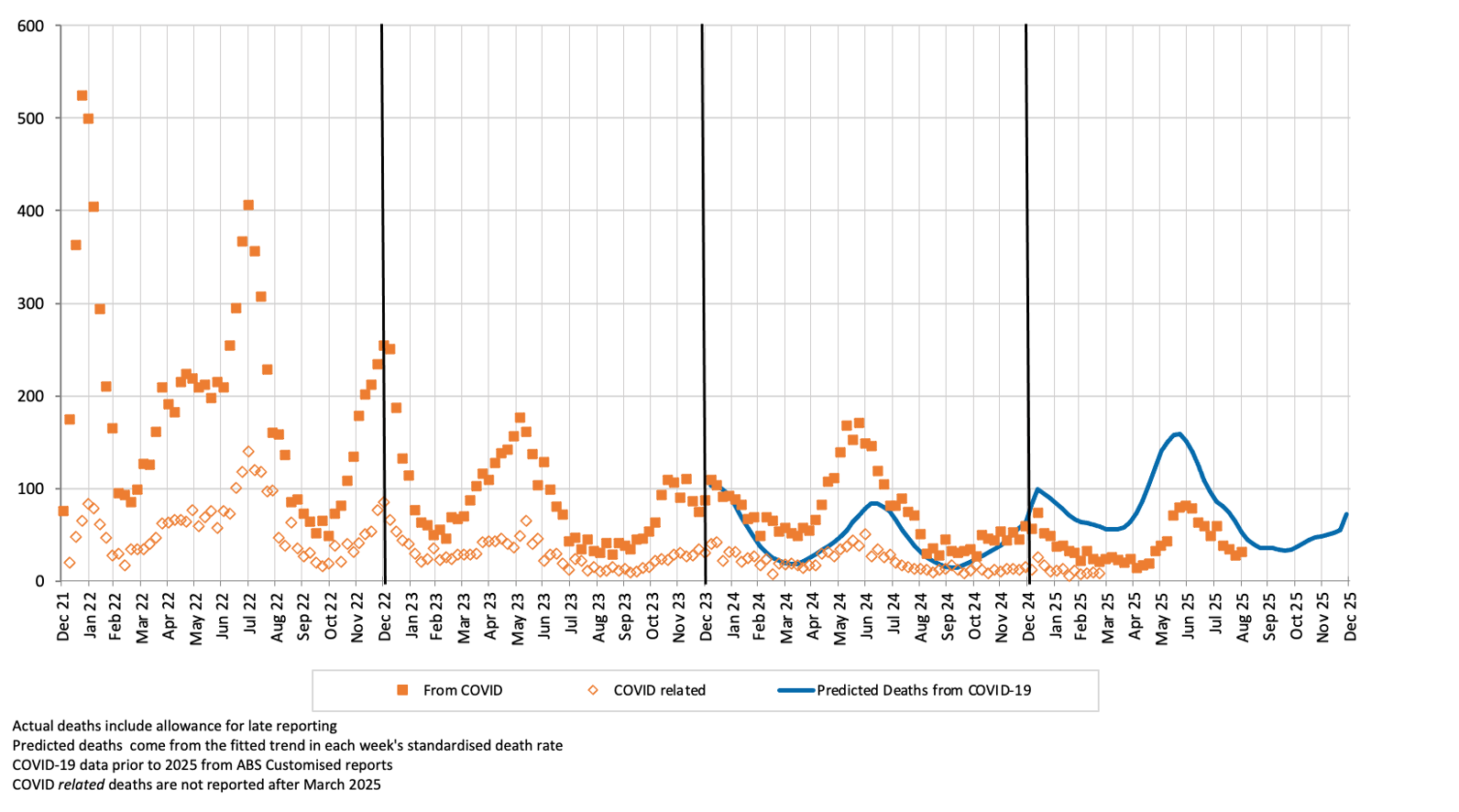
Figure 2 – Weekly deaths from COVID-19 and COVID-19 related
COVID-19 mortality in 2025 has so far followed the basic pattern that we predicted, with a wave in summer and a further wave in winter. However, the first eight months of 2025 have proven to be materially better than we anticipated, in terms of both the peak mortality of each wave and the underlying mortality between waves. COVID-19 is a new disease, and its mortality impact continues to be difficult to predict.
Deaths from Influenza between January and August 2025 have been 52% worse than expected. Figure 3 shows the number of influenza deaths for the first eight months of years since 2015.
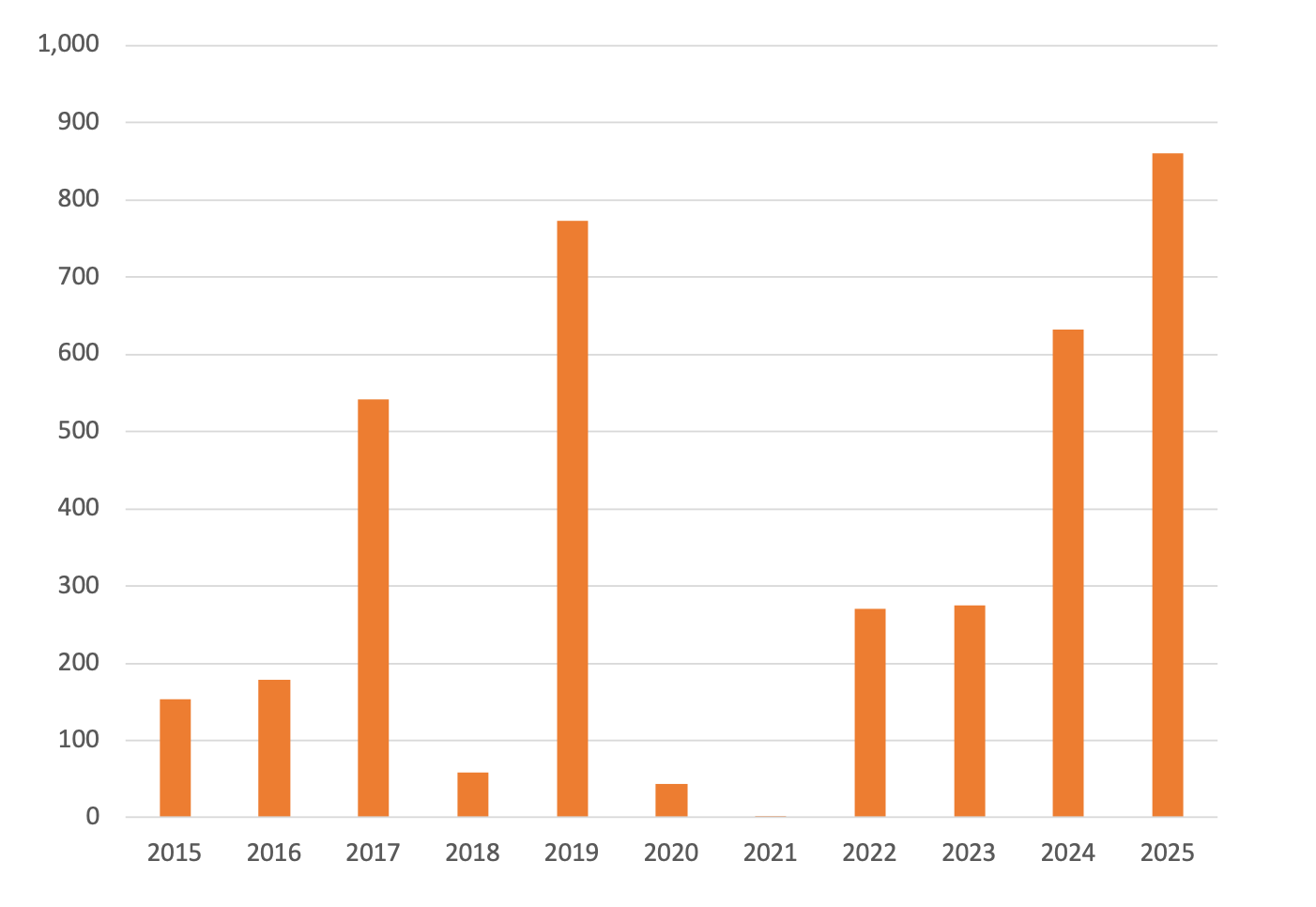
Figure 3: Influenza deaths for the first eight months of the year, 2015-2025
According to the Royal Australian College of GPs, “2025 is the worst year on record for influenza adjusted for population”, with around 1.5% of the population having experienced a notifiable infection [2] . Over the year to August 2025, this has led to 860 recorded influenza deaths, 290 higher than we predicted. There have been more influenza deaths at this stage of the year than in any year since 2015, and more than double the number recorded after eight months in seven of the ten prior years.
The Mortality Sub-Committee’s recent report, Mortality in Australia and the Rest of the World in 2024 , highlighted the historical correlation between peaks in influenza mortality on the one hand, and deaths from several other causes on the other. This has again been the case in 2025, with the larger-than-usual spike in influenza deaths coinciding with higher-than-usual levels of deaths from pneumonia (160 excess deaths, or 9%, higher than predicted) and cerebrovascular disease (280 excess deaths, or 5%, higher than predicted).
The Sub-Committee’s recent report also highlighted that, unlike most causes of death, cancer mortality continued to improve during and after the COVID-19 pandemic. Our 2025 baseline included an expectation that cancer mortality would continue to improve, with a SDR 1.4% lower than in 2024. In the first eight months of the year, cancer deaths were 750 less than expected, or a further 2% better than the baseline prediction.
The Mortality Sub-Committee has examined the latest Provisional Mortality Statistics, covering deaths occurring up to 31 August 2025 and registered by 31 October 2025, released by the Australian Bureau of Statistics (ABS) on 28 November 2025.
Our April 2024 Actuaries Digital article discussed in some detail the reasoning behind our approach to setting the baseline from 2024.
Our estimate of excess deaths measures how 2025 mortality compares to the expected level based on prior years, after allowing for one year’s mortality improvement. This is detailed in our report, Mortality in Australia and the Rest of the World in 2024 .
In summary:
This excess mortality analysis is intended for discussion purposes only and does not constitute consulting advice on which to base decisions. We are not medical professionals, public health specialists or epidemiologists.
To the extent permitted by law, all users of the analysis hereby release and indemnify The Institute of Actuaries of Australia and associated parties from all present and future liabilities that may arise in connection with this analysis, its publication or any communication, discussion or work relating to or derived from the contents of this monthly analysis.
[1] As in our previous work, we have estimated the number of coroner-referred COVID-19 deaths based on the experience of late 2021 and 2022. If our estimate of coroner-referred COVID-19 deaths is too high (or low), this will not affect the total level of excess deaths measured; it will just mean that our estimate of non-COVID-19 coroner-referred deaths will be too low (or high) by the same amount.
[2] Royal Australian College of General Practitioners. (2025, October 9). Australia posts record-breaking flu numbers as vaccination rates decline. RACGP. https://www.racgp.org.au/gp-news/media-releases/2025-media-releases/october-2025/australia-posts-record-breaking-flu-numbers-as-vac
The members of the Sub-Committee are Milesh Bhadresa, Jenny Gibson, Sarah Highet, Jenny Ingram, Ronald Lai, Jennifer Lang, Louis Mace, Matt Ralph, Amitoze Singh and Colin Yellowlees.
The views expressed in this article are those of the author(s) or working group named below, and do not necessarily reflect the views of the Actuaries Institute. This work is licensed under a Creative Commons Attribution-NonCommercial-No Derivatives CC BY-NC-ND Version 4.0.