Interview
Career and Leadership
Superannuation and Investments
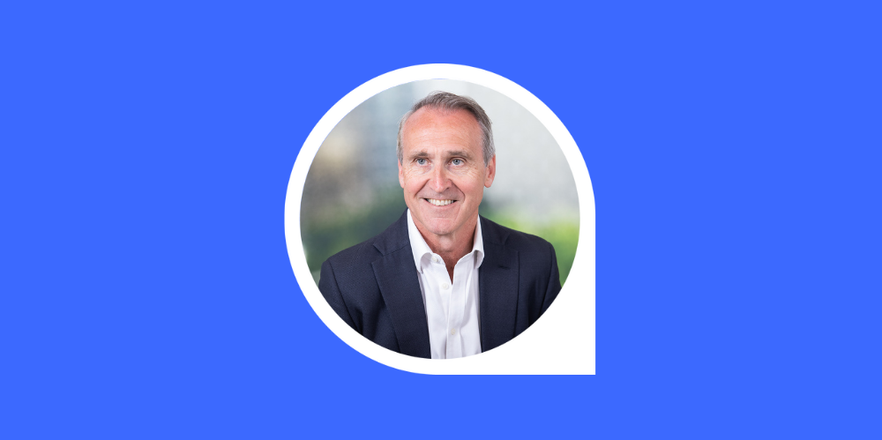
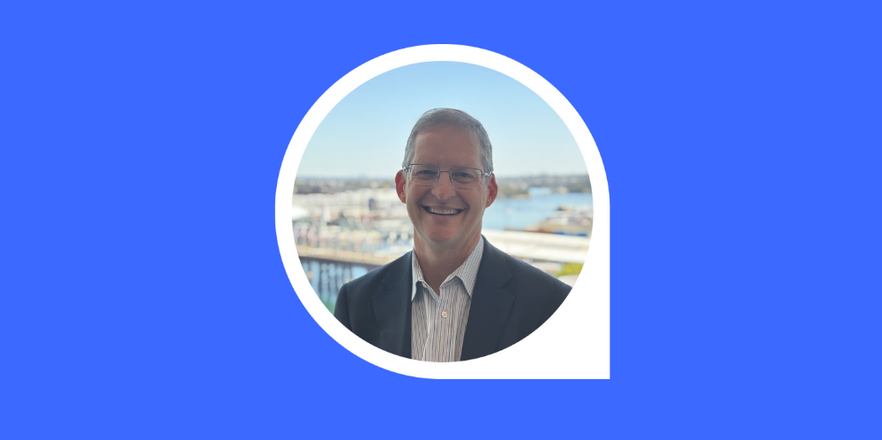
Under the Spotlight with Council Member Andrew Boal




Claim your CPD points
Andrew Boal has built a career spanning more than 40 years across superannuation, retirement income and financial services — moving from regional and global leadership roles at Willis Towers Watson to CEO of Rice Warner, and now Partner at Deloitte. Throughout, he has applied actuarial rigour to one simple belief: that a genuine focus on customer outcomes is never the wrong direction.
Now serving as a Council Member of the Actuaries Institute, Andrew brings that same clarity of purpose to the profession’s future.
After completing a science degree at the University of Melbourne, majoring in Maths and Statistics, I began my career with a local consulting firm called PTOW, which was soon acquired by Towers Perrin.
After a few years, I joined Noble Lowndes (now part of Mercer), where I gained broader experience in administration and managing small teams. In 1991, I joined The Wyatt Company and spent the next 27 years in what evolved into Willis Towers Watson. For the last 15 years, I held leadership roles — including Managing Director of Watson Wyatt and Towers Watson, and Head of Australasia for WTW and Willis.
During that time, I was also a member of the Asia Pacific Leadership Team and the Global Marketing Leadership Team. After leaving WTW, I became CEO of Rice Warner, leading the firm until its sale to Deloitte, where I continue to serve as a Partner.
I have spent my career working across superannuation, retirement income and broader financial services, including a period in insurance broking. Much of my professional focus has been on helping institutions manage risk and improve financial outcomes for their customers. This includes designing targeted product solutions and service models that enable customers to make more informed financial decisions and achieve long-term financial success. Throughout my career, I have been guided by a simple belief that you can’t go too far wrong if you have a genuine focus on customer outcomes.
"Throughout my career, I have been guided by a simple belief that you can’t go too far wrong if you have a genuine focus on customer outcomes."
The actuarial profession has given me an extraordinary foundation for my career. Serving on Council in 2012 gave me a glimpse of the opportunity to give back and to help ensure the long-term sustainability and relevance of the profession. We are operating in a period of significant economic, regulatory and technological change. I believe actuaries have an important role to play in bringing rigour and long-term thinking to complex societal challenges and being a member of Council provides a platform to help shape how the profession responds to those challenges.
The profession is evolving beyond its traditional roots in insurance and superannuation into broader areas involving risk, data and sustainability. I expect this trend to continue as society faces increasingly complex financial, environmental and demographic challenges.
Actuaries have the opportunity to contribute to areas such as retirement income system design, climate risk, health and disability financing, data governance and AI oversight. However, our influence will depend not just on technical excellence, but also on clear communication. We must continue to develop our ability to translate complex analysis into clear, actionable insight.
A pivotal shift for me was moving from technical consulting roles into leadership positions. That transition reinforced to me that, while technical proficiency is essential, leadership positions give you the opportunity to have greater reach and influence.
It also taught me that sustainable success comes through helping others to succeed. The ability to listen, understand different perspectives and create an environment where people can do their best work became just as important as my own technical expertise. Helping individuals grow, contribute confidently and succeed collectively as a team has been one of the most rewarding aspects of my career.
One of the most pressing issues for actuaries is ensuring our skills remain relevant in a world increasingly shaped by data science, automation and artificial intelligence. We must embrace these technologies while reinforcing the distinctive strengths of actuarial training — judgement, ethics and long-term thinking.
A related challenge is how young actuaries will develop their professional skills in an environment where AI may be able to perform much of the technical work traditionally undertaken in the early years of a career.
Those formative years help build intuition and professional confidence. If AI accelerates that process, we need to be intentional about what replaces it. As our workflows evolve, we will need to be deliberate in creating development pathways that allow emerging actuaries to develop critical thinking and professional judgement, and the confidence to interpret, question and challenge model outputs — using AI as a tool to augment their expertise, not replace it.
The Institute has an important role to play through education, professional standards and thought leadership. By evolving the qualification framework, supporting practical CPD learning and mentoring, and guiding the profession on responsible AI use, the Institute can help ensure actuaries remain influential, capable and trusted.
Step outside their comfort zone. Whether that means working in a different sector, contributing to public policy, taking on a leadership role or volunteering within the profession, stretching beyond familiar territory broadens your perspective and strengthens professional judgement. Collaborating with people who bring different skills and lived experiences challenges our assumptions and improves our ability to apply actuarial thinking in complex, real-world settings.
Through my work with clients, I hope to have helped many Australians to achieve a better and more secure retirement. Within the profession, I would like to think I have helped actuaries to remain respected and impactful and used our collective voice to improve societal outcomes.
The views expressed in this article are those of the author(s) or working group named below, and do not necessarily reflect the views of the Actuaries Institute. This work is licensed under a Creative Commons Attribution-NonCommercial-No Derivatives CC BY-NC-ND Version 4.0.


From career insights to big-picture thinking, our interview series brings together diverse voices shaping the actuarial profession
Subscribe to Actuaries Digital for free and receive the latest actuarial analysis, research, and commentary direct to your inbox