The tactics behind the ticket: A Critical Line puzzle solution



Claim your CPD points
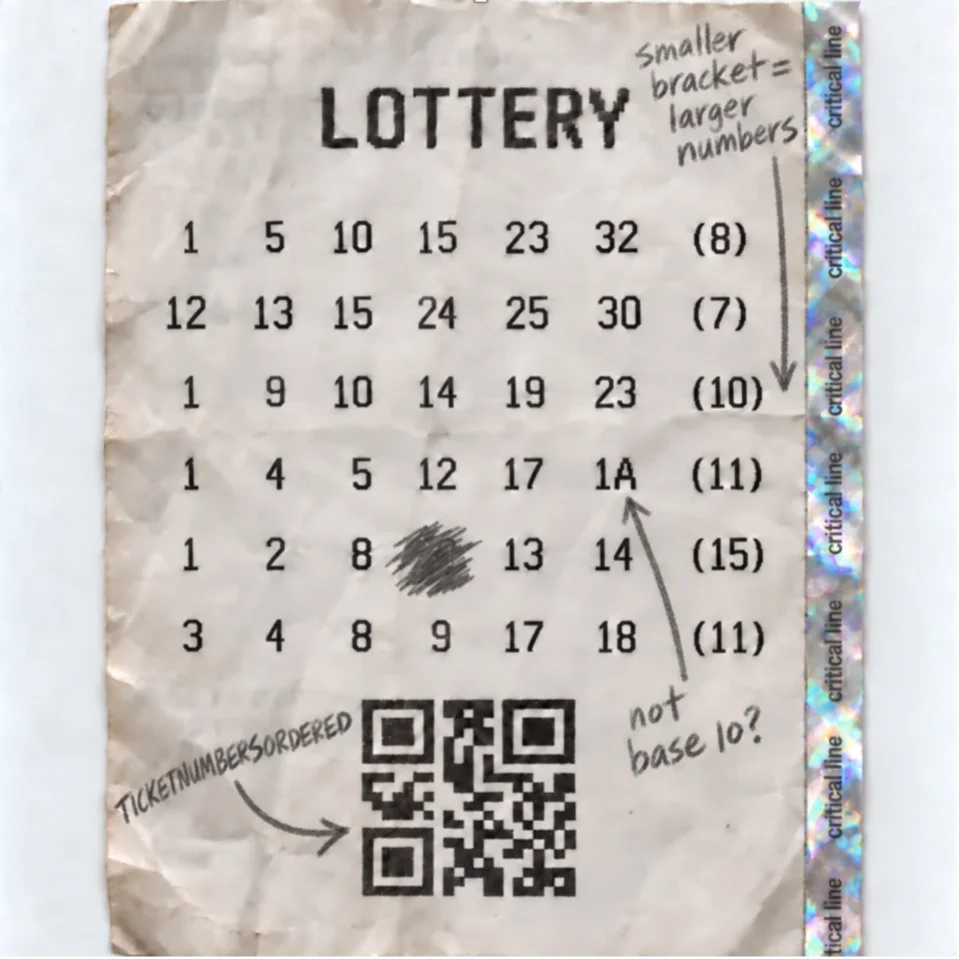
The lottery ticket I found incorporated a series of operations that were challenging to decipher, so well done to those who managed to untangle the clues and put together a solution.
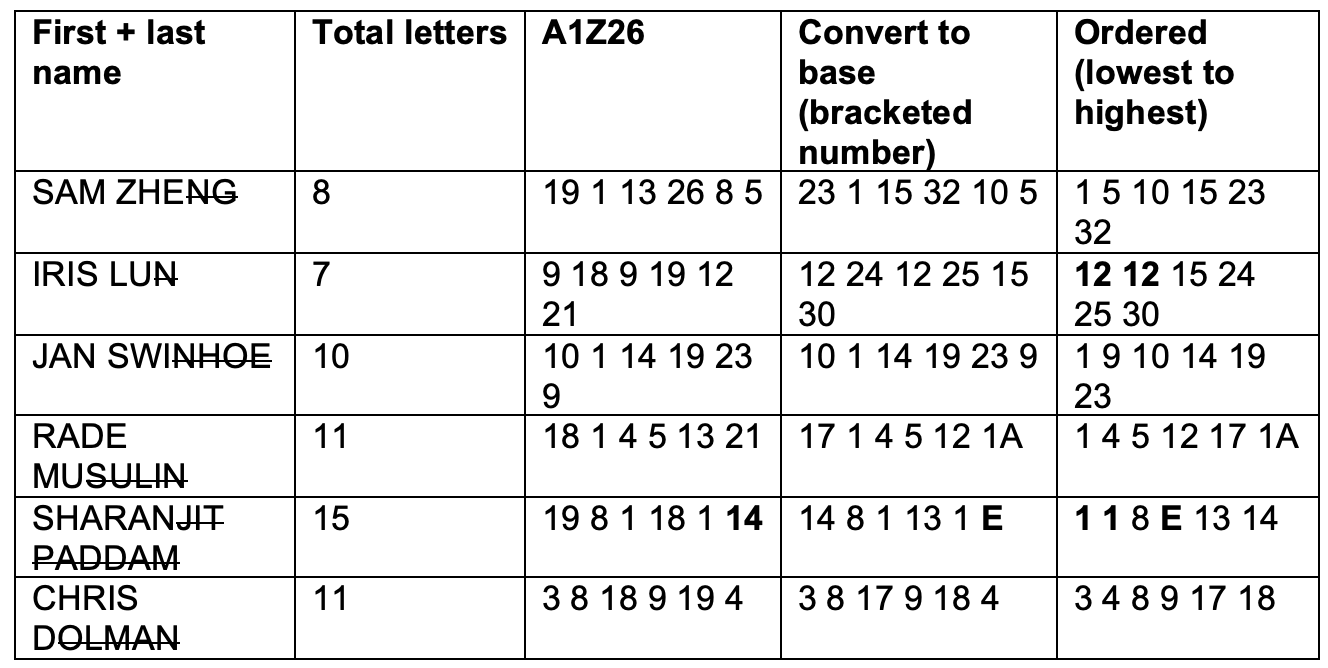
The transformation from name to entry worked as follows:
There were a few clues to help you get there:
Without further a-clue, let’s get into the answers!
a) Which well-known Australian actuary does each entry relate to?
‘Well-known Australian actuaries’ leads you towards the Actuary of the Year winners page published by the Institute. You can confirm that you have the right people if you recognise that the number of letters in the most recent six winners’ names matches with the number in brackets. The QR clue TICKETNUMBERSORDERED applies here because the names are in order from the most recent (as of puzzle publication) backwards.
The final answer to this component is, in order down the ticket, Sam Zheng, Iris Lun, Jan Swinhoe, Rade Musulin, Sharanjit Paddam, and Chris Dolman.
For the next two answers a conversion table is useful:
b) What was obscured in entry 5?
The answer here relates to the N in SHARANJIT. Translated to A1Z26 yields 14, which is E in base 15.
c) Why entries 2 and 5 are not like the others?
The conversion rules above have two issues – IRIS and SHARANJIT have duplicated characters. The value associated with the second instance of these characters is incremented by one to ensure the lottery numbers chosen for each entry are unique.
d) What the entry for your name (or pseudonym) would be?
This answer depends on you! The only requirement is that your name/pseudonym is at least 6 characters in length.
This month’s lottery logicians
Well done to everyone who made headway on this puzzle; it was particularly challenging! We received one correct answer to all four questions from two punters this issue:
Nicholas Lourensz was randomly selected and won the prize of a $50 voucher from the Actuaries Institute.
Until next time!
The views expressed in this article are those of the author(s) or working group named below, and do not necessarily reflect the views of the Actuaries Institute. This work is licensed under a Creative Commons Attribution-NonCommercial-No Derivatives CC BY-NC-ND Version 4.0.

Subscribe to Actuaries Digital for free and receive the latest actuarial analysis, research, and commentary direct to your inbox