Feature
Career and Leadership
General Insurance
Risk Management
Stress and Scenarios



Claim your CPD points
Insurers and reinsurers are in the business of risk management, and one key question preoccupies their minds: "What's the worst that can happen?" Jeremy Waite explores this question through the lens of scenario and stress tests, examines the merits of these approaches and highlights the necessary considerations.
Stress tests and scenarios are used by companies and regulators, in order to explore the potential actions, post a "scenario event".
In insurance, this could be to explore policy limits from plausible events, or to think through correlations that may not otherwise be considered. Lloyds have been considering scenarios for more than 20 years, and typically describe an event and the syndicate would need to consider all the covers that it offers which could be impacted, as well as its own protections.
This became very real to the author following the World Trade Center events, where airline hull losses became 100% correlated with buildings losses, and even whether this was one or two events on the insurance side, and whether one or two on the reinsurance side.
The International Actuarial Association (IAA) has defined a scenario as:
"a possible future environment, either at a point in time or over a period of time. A projection of the effects of a scenario over the time period studied can either address a particular firm, or an entire industry or national economy. To determine the relevant aspects of this situation to consider, one or more events or changes in circumstances may be forecast, possibly through identification or simulation of several risk factors, often over multiple time periods. The effect of these events or changes in circumstances in a scenario can be generated from a shock to the system resulting from a sudden change in a single variable or risk factor. Scenarios can also be complex, involving changes to and interactions among many factors over time, perhaps generated by a set of cascading events. It can be helpful in scenario analysis to provide a narrative (story) behind the scenario, including the risks (events) that generated the scenario."
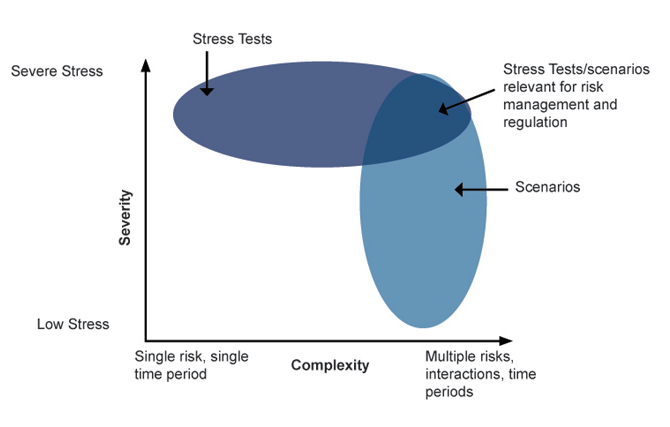
The IAA has defined a stress test as:
"a projection of the financial condition of a firm or economy under a specific set of severely adverse conditions that may be the result of several risk factors over several time periods with severe consequences that can extend over months or years. Alternatively, it might be just one risk factor and be short in duration. The likelihood of the scenario underlying a stress test has been referred to as extreme but plausible."
The illustration below makes clear the distinction between stress and scenarios:
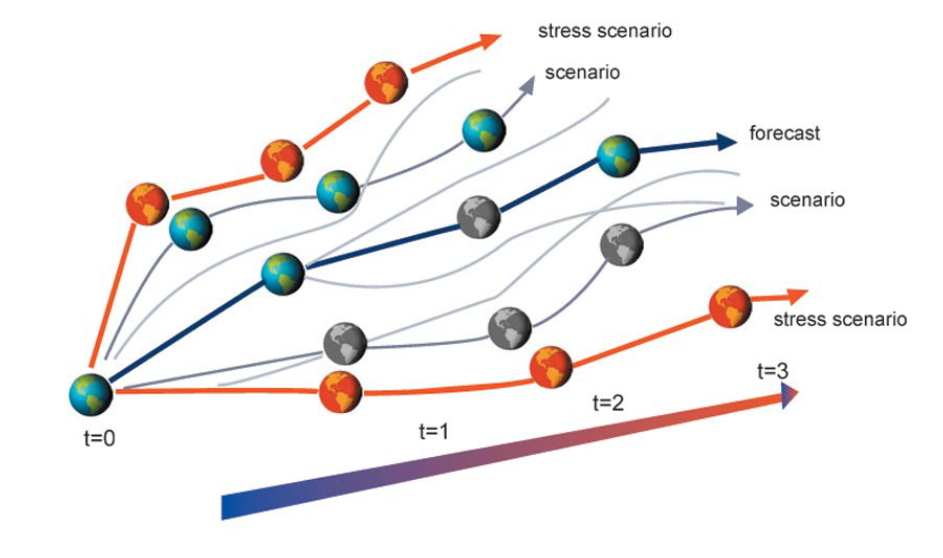
Stress tests and scenarios are a useful alternative method of measuring adverse outcomes in a way that is more easily understood by boards and senior management within a company. These scenarios can consider risk beyond the normal modelled loss and indeed consider things that seem remote.
Stress scenarios are one way to quantify catastrophic loss potential and thereby manage exposure. The Scenario approach has the following advantages:
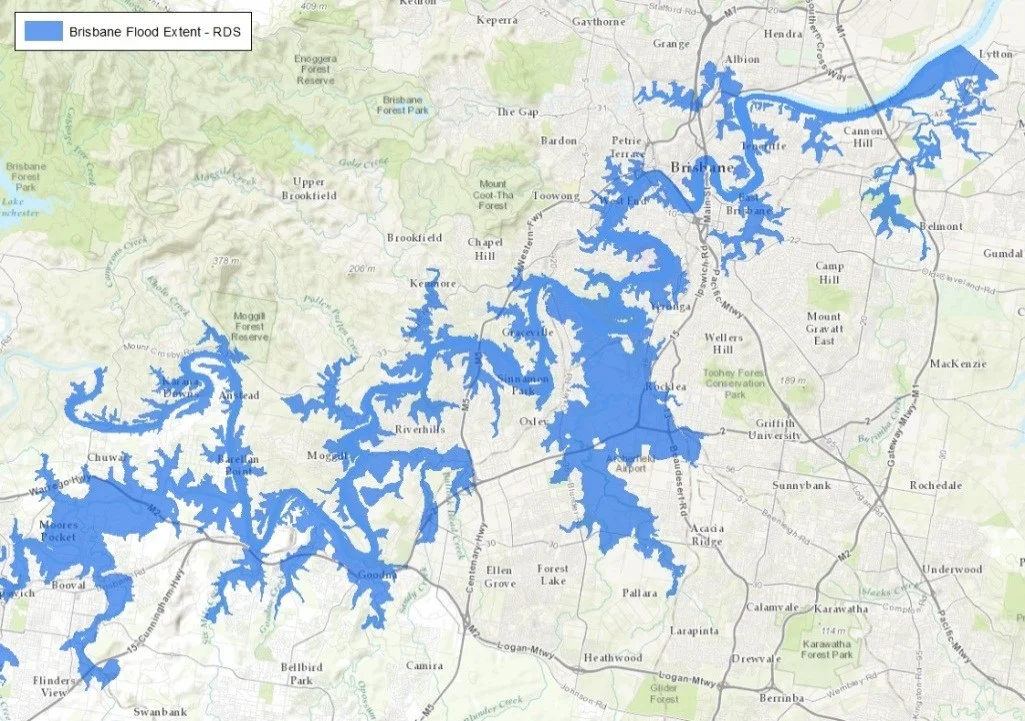
In Australia, it would be necessary to consider not just major perils, such as earthquake and cyclone, but also more frequent perils such as flood, cyclone, storm and bushfire. Events occurring overseas could have a substantial impact (direct or indirect) on APRA regulated insurers, and as such may need to be factored into the analysis.
The following highlights some of the key considerations when developing realistic disaster scenarios:
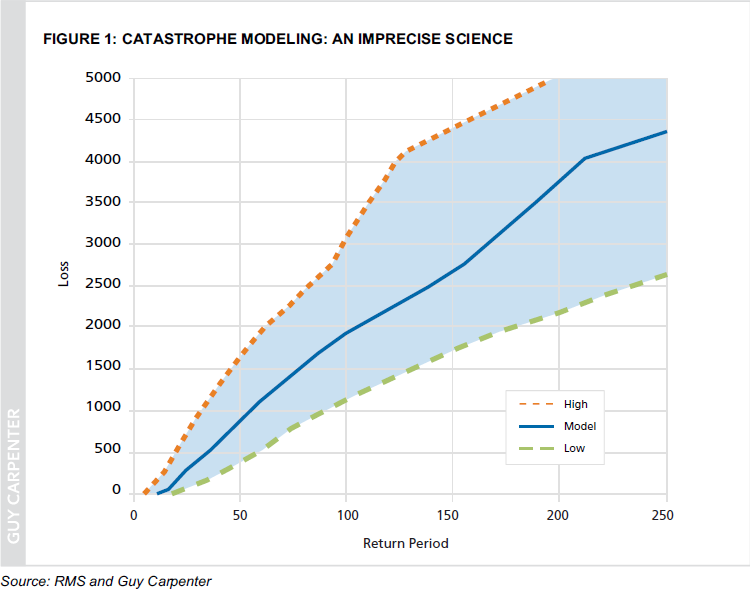
Modelling Assumptions
Multiple Events
Un-modelled perils
Scenario Updates
Vulnerability Estimation
Secondary Perils
Scenarios are a useful complement in risk assessment and strategic planning, and can highlight the need to avoid, mitigate, reduce or transfer risk.
The views expressed in this article are those of the author(s) or working group named below, and do not necessarily reflect the views of the Actuaries Institute. This work is licensed under a Creative Commons Attribution-NonCommercial-No Derivatives CC BY-NC-ND Version 4.0.