Career and Leadership
Actuaries Working in New Fields: Part 4



Claim your CPD points
In the fourth edition of our series on actuaries who have forged careers in diverse areas, we speak to Kate Lyons and Solai Valliappan. Both Kate and Solai have drawn on their experiences of working at general insurers to pivot into new directions.
Kate is currently the Chief Information Officer at the Insurance Council of Australia (ICA).
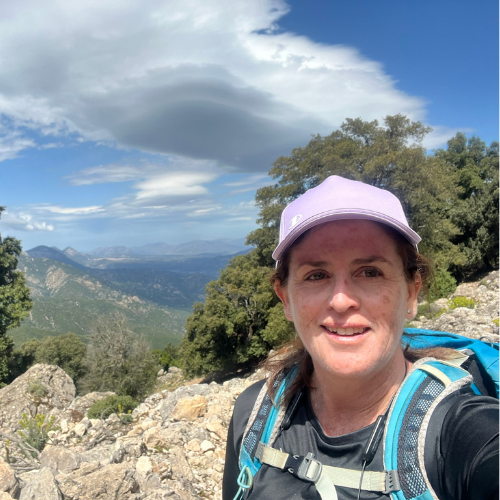
Kate Lyons
With over 25 years of general insurance experience in Sydney and London, Kate saw wider opportunities open while working at Suncorp. Given the direct link between the physical risks of climate change and Suncorp’s reinsurance strategy, Kate volunteered for the climate action committee at the ICA, which helped her pivot into her current role at the ICA. Kate focuses on policy recommendations and advocacy, using industry data to build the evidence base for shared understanding of issues like insurance affordability.
Solai is a tech investor, adviser and board director.
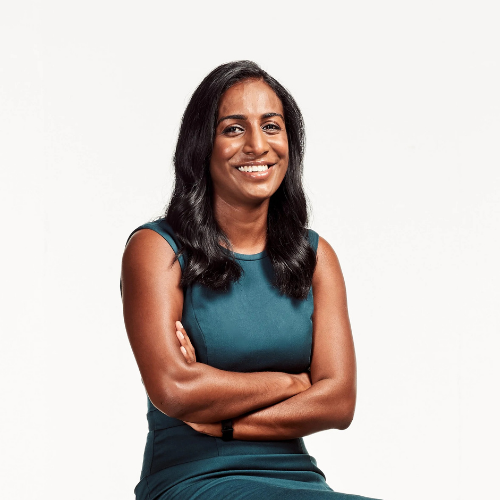
Solai Valliappan
Solai started her career at Zurich, working in pricing and reserving teams. During this time, she moved into the role of Strategic Assistant to the CEO of the general insurance business. This allowed Solai the opportunity to work with an executive team and board members and see how the spreadsheets and SAS code translated to decisions at the C-suite level.
From there, Solai moved into venture capital and has established a portfolio career. She advises the early-stage venture capital ecosystem, sits on boards and investment committees, lectures university students and writes a weekly newsletter ‘ Chai and Capital ’ on the fast-growing and dynamic Indian startup tech ecosystem.
While neither Kate nor Solai have looked at any claims triangles recently, the fundamental skills they have developed as actuaries are exercised regularly.
Solai highlights the incredible work ethic of actuaries, attention to detail and ability to make sense of the numbers. In particular, the skill of analysing data and information in uncertain environments before making critical decisions are fundamental skills to the actuarial profession. Kate points to skills like systems thinking, analytical rigour and research discipline.
Kate and Solai have also had significant eye-opening learning experiences from transitioning into new areas.
Solai has learnt to be bold with her viewpoint and share her voice more publicly on different platforms. Solai now has a substack, YouTube channel, Beehiiv newsletter and contributes to LinkedIn and podcasts – things she would not have believed if someone had told her this before!
Kate’s exposure to the potential of AI, in particular learning about AI applications like ‘virtual advisory boards’ has fundamentally shifted how she thinks about the tools available to actuaries and what is possible in our work.
Their experiences demonstrate the benefits of being open to new things and not letting current capabilities and tools limit views of what is possible.
It is also important to point out the impact that Kate and Solai have made in their work and the way that their actuarial skills have contributed to this. Kate’s most rewarding moments include when her work, like the Flood Defence Fund campaign or analysis of Australians most exposed to flood risk, has made it into public discourse.
And when politicians quote our numbers and grasp the urgency for action, you feel the impact of evidence-based advocacy.
For Solai, one example of creating impact includes chairing a not-for-profit Board that helps women in Tanzania become financially self-sustaining to end the orphan crisis. This gives Solai meaning and purpose when she goes through the not-for-profit’s financial statements and board papers.
For actuaries considering opportunities in non-core fields, both Kate and Solai advise actuaries to get curious about other fields. Kate suggests attending cross-disciplinary events and talking to people doing interesting work. Solai notes that you never know what may spark your curiosity, and that opportunities could surface that you may not have been aware of or necessarily looking for.
And when those opportunities surface, what do we do with them? Kate suggests we should, in fact, consider roles we may only have confidence in doing 50% of right now – “you can add value and grow into a role where you are truly interested.”
Both Solai and Kate can see how the actuarial profession has been evolving to embrace more diverse career paths.
Solai has observed a new mindset in the university students whom she has lectured:
I was so impressed with the students...and how they’re thinking about graduate positions and their future employment. Many of them are already thinking about ‘non-traditional’ careers and this feels very different to when I was at university.
For Kate, an evolution can be seen in the tools that actuaries use.
“AI tools are already changing what's possible—automating routine analysis and freeing actuaries to focus on higher-order thinking, strategy, and communication. I think this will naturally push the profession toward more diverse applications.
The analytical rigour we bring is needed in climate adaptation, public policy, healthcare system design, technology ethics—so many areas crying out for evidence-based decision-making.”
Where to next for the profession? From talking to Solai and Kate, it is clear that while we have some idea of key changes on the horizon, the very nature of moving into new areas means that we cannot fully anticipate the exciting surprises in store for actuaries.
Whether you're in technology, climate science, social policy or another domain outside insurance and superannuation, we'd like to feature your experience. Your story could help other actuaries understand the breadth of opportunities available and how actuarial skills translate across different sectors.
Contact us at [email protected] to share your insights and be part of this ongoing series about actuaries in diverse roles.
This piece is one of many initiatives under the Diversity and Inclusion Working Group, which seeks to highlight the diverse experiences that strengthen our profession. By celebrating different voices, identities and stories, we aim to show how diversity and inclusion make us stronger, more innovative and better equipped to serve our communities.
The views expressed in this article are those of the author(s) or working group named below, and do not necessarily reflect the views of the Actuaries Institute. This work is licensed under a Creative Commons Attribution-NonCommercial-No Derivatives CC BY-NC-ND Version 4.0.