Feature
Career and Leadership
Why are there more shark attacks being reported in NSW?



Claim your CPD points
The increasing number of shark attacks off the NSW coast this year has us asking, are there more sharks? Or just more shark attacks? Jennifer Lang puts an actuarial eye to the mystery.
I'm increasingly having a conversation with friends about why the number of sharks is increasing. But are there more sharks? Or just more shark attacks?
First on the shark attacks. In 2015 we have had a huge increase in shark attacks. There has been a death in February in Ballina and a serious injury in June (also in Ballina). According to the official shark attack file , there have been 13 unprovoked shark attacks off the coast of NSW so far this year - with one death and seven involving injuries. In contrast, in 2014 there were three unprovoked attacks (two deaths), in 2013 there were three attacks (with one death and one involving injury) and in 2012 there were five unprovoked attacks with no deaths (three involving injuries). In the four most recent years (including 2015 which isn't finished yet), there have been six shark attacks on average, with one death per year, and 2.75 attacks involving injuries per year.
"We have an increase in shark attacks of 86% over a decade - that is 6% a year."
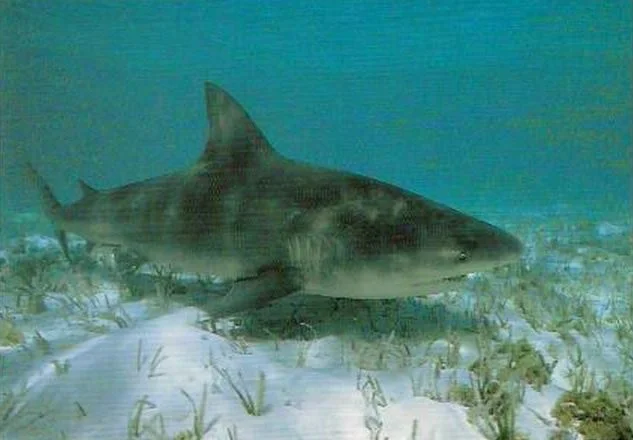
Is there something in the water?
The shark attack file has statistics since 1791 (although I suspect in the early years non fatal attacks weren't well recorded). According to this paper from 2011 (in pdf), in NSW, in the 20 years between 1990 and 2009, there were 73 recorded shark attacks, with two fatal, and 45 involving injuries. That's an average of 3.7 attacks each year, 0.2 deaths, and 2.3 involving injuries.
So I think we can safely say there is an increase in reported shark attacks this year - particularly since October, November and December generally have more than the average number of shark attacks (Australia wide).
But are there more sharks in the water ready to attack?
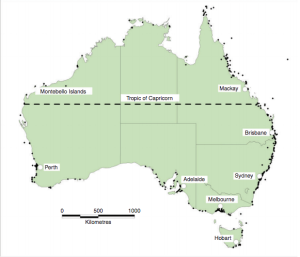
Recorded shark attacks around Australia. Source: John West, changing patterns of shark attacks in Australian Waters (2011)
When I ask my marine biologist friends, they tell me there isn't enough evidence to tell one way or the other. That's hard for many people to believe, given the publicity lately (especially after Mick Fanning narrowly escaped a shark (even if it was in South Africa, quite a long way from the NSW coastline). The best source of information is the 2011 paper by John West - Changing patterns of shark attacks in Australian waters, and its companion paper - a review of Shark attacks in the Sydney Region.
West's 2011 paper is the most comprehensive. He talks about the two decades to 2009 - when there were 186 recorded shark attacks in total. In the decade to 2009, there were 121 attacks, whereas in the decade to 1999, there were 65. That's a total increase in attacks of 82%. He outlines the possible reasons for increases in shark attacks:
There are two kinds of population increases. The total number of people in Australia increased between the decade to 1999 and the decade to 2009 by 15%. In addition, the number of international tourists ( measured as short term overseas arrivals into the country ) increased by around 50% over the decade to December 2009.
There has been a big increase in people visiting the beach, and participating in water based activities. West quotes the Surf Life Saving Association, with statistics of a 29% increase in rescues in the decade to 2009, and a 1100% increase in "preventative actions" per year between 1990 and 2009. While the increase in beach visits is also driven by the population increase, it is more than the base population increase. Worldwide scuba diving has increased by 418% over the two decades to 2008. Changes in the popularity of water-based activities over the past four decades was reflected in the activities of the victims. For example, there has been a 310% increase in attacks on surfers since 1999, in the data base of shark attacks.
This is speculation, but it does seem highly likely that increased attention, availability of mobile phones and increased attention paid to shark attacks has increased the number of reports of shark attacks involving no injury. The number of shark attacks reported in the database that didn't result in injury increased by 190% between the decades 1990-1999 and 2000 to 2009 (from 12 to 35). That means the number of attacks resulting in injury or death increased from 65 to 86 - a 32% increase.
Over the long-term, there are quite a few data series suggesting shark numbers have decreased. For example, shark netting in Sydney's beaches (introduced in the 1930s) initially caught 88 sharks a month, but over the longer term that declined to eight sharks a month. But what about more recently? West's paper doesn't have strong data in either direction on this. It is possible that the number of sharks in the waters around Australia has increased in recent decades. But how likely is that? All the statistics on overfishing suggest that there are fewer fish in the sea than there were 100 years ago. But whale numbers are mostly up this year - they've been protected since 1967, and their numbers are gradually increasing. Great white sharks have been protected in Australia since 1999 . According to the Australian government :
Despite a general scarcity of data on the white shark's population size and population trends, there appears to be an overall, long-term decline in abundance of white sharks in Australian and international waters. Evidence for this decline in Australia comes from game fishing records and the shark control programs run in New South Wales and Queensland. For example, the NSW shark control program caught a total of 151 white sharks in the 1950's as compared to only 44 in the 1990's. Similar declines are also evident in the Queensland program.
The other potential change in number of sharks could come from a change in behaviour - if sharks are more likely to frequent populated areas. Some suggestions I've heard include:
There is some evidence that bull sharks (one of the three species generally responsible for shark attacks in Australian waters) are only in the water when it is warm - so the increasingly warm water off the Australian coast could increase their numbers, particularly in spring and autumn, as the water stays warmer for longer with global warming.
We have an increase in shark attacks of 86% over a decade - that is 6% a year. Explanations include:
From what I can see from the statistics, we can explain the increase in shark attacks between 1990 -1999 and 2000-2009 with two basic factors:
It seems unlikely that the total number of sharks (an apex predator) in the sea as a whole has increased at a time when the number of fish in the sea has catastrophically dropped.
It is somewhat possible that there are more sharks hanging around near humans, but it seems much more likely that there are more humans hanging around sharks.
The majority of the research in this post is not mine; it comes from John West , Manager Life Sciences operation at Taronga Zoo, and curator of the Australian Shark Attack File, plus various places he references. He has written two great papers- a 2011 paper - Changing patterns of shark attacks in Australian waters , and its companion paper - a review of Shark attacks in the Sydney Region. Any errors or misrepresentations are mine.
This article originally appeared on Actuarial Eye on October 5, 2015.
The views expressed in this article are those of the author(s) or working group named below, and do not necessarily reflect the views of the Actuaries Institute. This work is licensed under a Creative Commons Attribution-NonCommercial-No Derivatives CC BY-NC-ND Version 4.0.